



What Exactly Is Rooibos?
Rooibos, which means 'red bush' in Afrikaans, is not technically a tea at all. It’s a herbal infusion made from the needle-like leaves of the Aspalathus linearis shrub. This plant is unique because it only grows in a small, mountainous region of South
Africa's Western Cape called the Cederberg. Unlike black and green teas, which come from the Camellia sinensis plant, Rooibos is part of the legume family, making it more closely related to peas than to traditional tea. This botanical distinction is the key to its most famous characteristic: it is naturally, 100% caffeine-free.
The Caffeine-Free Advantage
Because Rooibos never contained caffeine to begin with, it doesn't need to undergo any chemical processing to remove it. This makes it a fantastic choice for anyone looking to reduce their caffeine intake, whether due to sensitivity, pregnancy, or simply a desire to avoid stimulants. You can enjoy a warm, comforting cup in the evening without worrying about it disrupting your sleep. The absence of caffeine also means no risk of the jitters, anxiety, or heart palpitations that some people experience with coffee or other teas.
More Than Just a Decaf Option
Rooibos stands on its own with a host of potential wellness benefits. It's packed with powerful antioxidants, such as aspalathin (which is unique to the plant) and quercetin. Some studies suggest these compounds can help boost the body's natural defences. Research has indicated that daily consumption of rooibos may be linked to improved heart health by helping to lower 'bad' LDL cholesterol, increase 'good' HDL cholesterol, and reduce blood pressure. It is also notably low in tannins, the compounds that can sometimes interfere with the body's absorption of iron, making it a good choice for those with iron concerns.
Red vs. Green: A Tale of Two Tastes
Just like with traditional tea, there are different varieties of Rooibos. The one you're most likely to see is red Rooibos. This version gets its characteristic reddish-brown colour from an oxidation process the leaves undergo after harvesting, similar to how black tea is made. This results in a smooth, naturally sweet flavour with notes of honey, caramel, and vanilla. Green Rooibos, on the other hand, skips the oxidation step. The leaves are dried quickly to preserve their colour and create a lighter, more delicate brew with a grassy and herbaceous flavour profile. While red is often seen as the comforting, classic choice, green Rooibos may contain even higher levels of antioxidants.
How to Brew the Perfect Cup
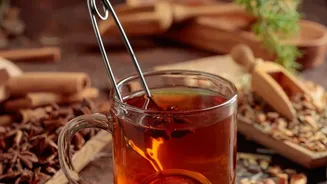
One of the best things about Rooibos is that it's incredibly forgiving to brew. Because it's low in tannins, it won't become bitter if you over-steep it. To make a hot cup, simply use one to two teaspoons of loose-leaf Rooibos (or one teabag) per cup of water. Pour over boiling or near-boiling water (around 100°C) and let it steep for at least 5 to 7 minutes—or even longer if you prefer a stronger flavour. It's delicious on its own but also pairs wonderfully with milk, honey, or a slice of lemon. For a refreshing summer drink, Rooibos is excellent as an iced tea, either by chilling a hot brew or letting it cold brew in the fridge for 6 to 12 hours.