






Why Gentle Movement Helps
Our digestive system is intricately linked to our nervous system, often called the 'gut-brain axis'. When we are stressed, our body enters a 'fight-or-flight' mode, which can slow down digestion. Yoga helps by activating the 'rest-and-digest' state, allowing
the body to process food more efficiently. The gentle compression and stretching involved in certain poses act like an internal massage for the abdominal organs. This action can improve blood flow, stimulate the intestines, and help relieve common issues like bloating and trapped gas.
Cat-Cow Pose (Marjaryasana-Bitilasana)
This is a foundational movement that warms up the spine and gently massages your digestive organs. Start on your hands and knees in a tabletop position, with wrists under shoulders and knees under hips. As you inhale, drop your belly, lift your chest and tailbone, and look forward into Cow Pose. As you exhale, round your spine toward the ceiling, tuck your chin to your chest, and press the mat away, moving into Cat Pose. The continuous, flowing movement between these two poses helps to stimulate the abdominal region, reduce bloating, and wake up the entire digestive area. Repeat this gentle flow for about one to two minutes, coordinating the movement with your breath.
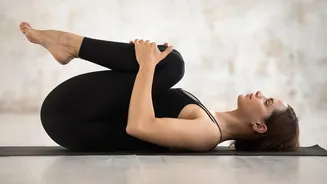
Wind-Relieving Pose (Pawanmuktasana)
As its name suggests, this pose is excellent for releasing trapped gas and easing bloating. Lie on your back with your legs extended. As you exhale, draw one or both knees toward your chest. Wrap your arms around your shins and hug them gently. You can hold this position or rock gently from side to side to give your lower back a massage. This compression on the abdomen stimulates the internal organs and encourages movement within the digestive tract, helping to alleviate discomfort and constipation. Hold for at least 30 seconds to a minute, breathing deeply into your belly.
Supine Spinal Twist (Supta Matsyendrasana)
Twisting poses are fantastic for digestive health because they compress and then release the abdominal organs, which encourages fresh blood flow and stimulates movement. To begin, lie on your back and draw your knees into your chest. Extend your arms out to the sides in a 'T' shape. Gently lower both knees to your right side, keeping your shoulders flat on the floor if possible. You can turn your gaze to the left for a deeper stretch. This pose massages the intestines and can help relieve constipation and bloating. Hold for several deep breaths before returning to the center and repeating on the other side.
Child’s Pose (Balasana)
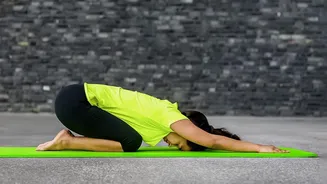
This is a restorative pose that calms the mind and provides a gentle compression for the belly, which can be very soothing for an upset stomach. Kneel on the floor, sit back on your heels, and fold forward, resting your torso on your thighs. Your forehead can rest on the mat, and your arms can be stretched out in front of you or resting alongside your body with palms facing up. The light pressure of your thighs on your abdomen can help stimulate digestion, while the forward fold helps to calm the nervous system, which is beneficial since stress can negatively impact digestion. Rest here for as long as it feels comfortable.
Bridge Pose (Setu Bandhasana)
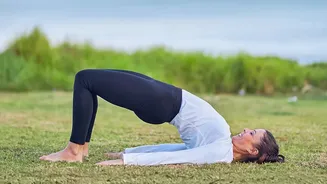
Unlike poses that primarily compress the abdomen, Bridge Pose offers a gentle stretch for the front of the body. Lie on your back with your knees bent, feet flat on the floor hip-width apart, and arms alongside your body. Press through your feet to lift your hips off the floor. This posture stimulates the abdominal organs and can improve circulation to the digestive system. It creates space in the abdomen rather than compressing it, which can be a welcome relief. Hold for 30 seconds to a minute while breathing steadily.