








The Green Energy Dilemma
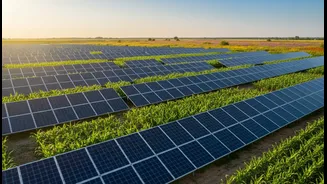
Large-scale solar farms are crucial to our clean energy transition, but they often spark a debate about land use. Vast arrays of photovoltaic panels, while generating zero-emissions electricity, can occupy significant tracts of land. Traditionally, this
land is cleared and maintained to prevent vegetation from shading the panels, creating what can sometimes be a sterile, industrial landscape. This approach can lead to a loss of local habitat for plants, insects, and animals, raising a valid concern: does our solution for the climate crisis come at the cost of local ecosystems? The challenge, therefore, is not just to generate green energy, but to do so in a way that is also green for the ground it stands on.
Volkswagen's Greener Blueprint
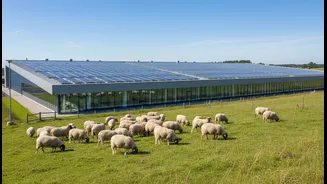
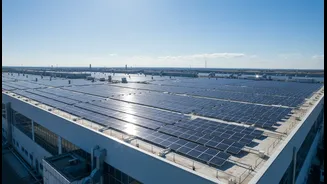
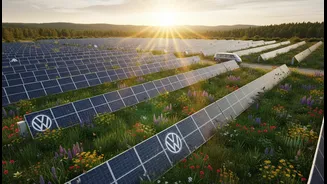
Volkswagen is tackling this dilemma head-on with an innovative approach that merges renewable energy production with ecological restoration. At several of its factory sites, including in Poznań, Poland, and Chattanooga, USA, the automaker is pioneering a concept often called 'agrivoltaics' or 'regenerative energy'. The idea is to make the solar farm a dual-purpose asset: one that generates power for its factories while simultaneously serving as a thriving habitat. For instance, at its Poznań plant, a massive 18.3-megawatt solar farm with over 31,000 panels not only helps power the production of electric vehicles but is also now a site for scientific research into biodiversity. This isn't just about planting a few flowers; it's a comprehensive strategy to prove that industry and nature can work in harmony.
From Panels to Pollinators (and Sheep)
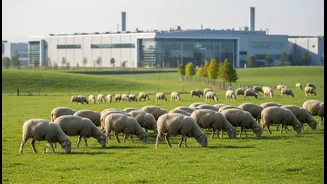
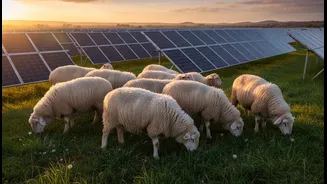
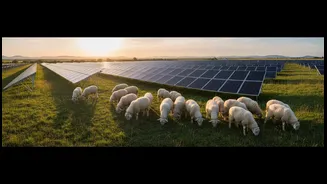
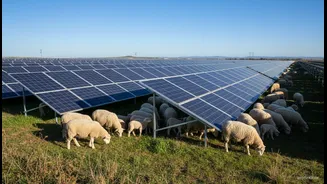
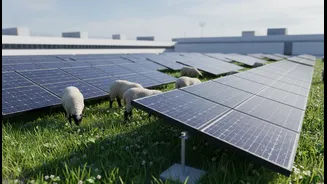
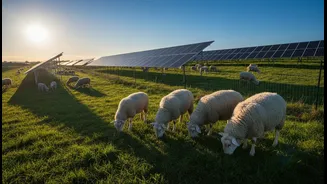
So, what does a biodiversity-friendly solar farm actually look like? Instead of gas-powered lawnmowers and herbicides, Volkswagen has deployed a flock of 100 sheep at its Poland facility to keep the grass neatly trimmed under the panels. This natural approach avoids the noise, emissions, and soil compaction associated with heavy machinery. But it goes beyond just grazing. These sites are actively managed to encourage a rich variety of life. By planting native grasses and wildflower meadows, the land becomes a sanctuary for pollinators like bees and butterflies, which are essential for healthy ecosystems. Studies have shown that such practices can significantly boost insect populations, which in turn provides food for birds and other animals, creating a complex and resilient local food web. In Zwickau, Germany, the company has even built nesting sites for birds, boxes for bats, and habitats for sand lizards.
A Model for Industry and Agriculture
This approach is about more than just corporate social responsibility; it's a strategic test bed for a new kind of industrial land management. At the Poznań site, Volkswagen has partnered with the Poznań University of Life Sciences to study the effects of this model on everything from animal welfare and soil quality to the microclimate under the panels. The goal is to gather hard data on how to best co-locate large-scale solar generation and agriculture. This movement, known as agrivoltaics, is gaining traction globally. Research indicates that the partial shade from solar panels can actually benefit certain crops by reducing heat stress and water evaporation, a significant advantage in water-scarce regions. For the solar panels themselves, the vegetation underneath can create a cooler microclimate, potentially improving their efficiency.
Relevance for India's Solar Ambitions
Volkswagen's experiments in Europe and the US offer a compelling blueprint for India. As India pursues one of the world's most ambitious solar energy targets, land is a precious commodity. The potential conflict between land for agriculture and land for solar energy is a real concern. The agrivoltaics model provides a potential solution, allowing for the dual use of land. Imagine solar farms across the country not only generating clean electricity but also supporting local biodiversity, providing grazing land, and even improving yields for shade-tolerant crops. Pilot projects are already underway in India, exploring the feasibility of this integrated approach. By turning solar farms into ecological assets, companies can address land-use conflicts and create additional value for rural communities, transforming solar infrastructure from a simple power plant into a cornerstone of sustainable local development.