









A Landmark Unveiling in Chennai
On July 20, 2026, The ePlane Company, an aerospace startup incubated at IIT Madras, pulled back the curtain on its first full-scale electric vertical take-off and landing (eVTOL) aircraft prototype. The aircraft, named the e200X, was unveiled at the company’s
new 60,000-square-foot manufacturing facility in Chennai. This prototype, designated PT-01, represents the culmination of five years of intensive research, development, and the testing of smaller-scale demonstrators. It marks a pivotal moment, moving the project from computer simulations and models into the realm of physical, full-scale validation, and placing India firmly in the global conversation about the future of urban air mobility.
What is an eVTOL Anyway?
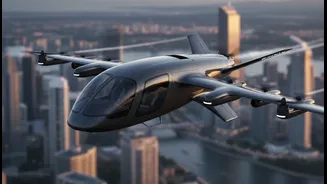
Think of an eVTOL as a hybrid between a helicopter and a small plane, but powered entirely by electricity. These aircraft are designed to take off and land vertically, just like a helicopter, which means they don’t need a long runway. Once airborne, they transition to fly forward like a conventional fixed-wing aircraft. This capability makes them ideal for crowded urban environments where space is at a premium. Because they run on batteries and electric motors instead of fuel-guzzling turbine engines, they are significantly quieter, produce no direct emissions, and are expected to have lower operating costs than traditional helicopters.
Meet the e200X
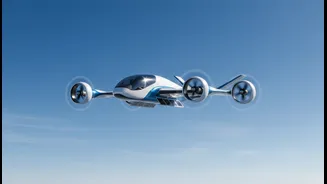
The e200X is not just any eVTOL; it's designed with Indian realities in mind. Constructed from lightweight carbon-fibre composites, the 2.2-ton aircraft is intentionally compact, with an 8-by-11-metre footprint. This smaller size is a key strategic advantage, as it's designed to operate from existing helipads and even reinforced rooftops, bypassing the need for expensive, purpose-built 'vertiports' that many global competitors require. The aircraft can carry a pilot and two passengers or 200 kg of cargo, with a planned range of around 110 kilometres on a single charge. For safety and reliability, it features multiple propellers for both vertical lift and forward flight, ensuring the aircraft can remain stable even if one of its motors fails.
The Path to Commercial Skies
Unveiling a prototype is a huge step, but the journey to commercial flight is a marathon, not a sprint. The e200X will now undergo a rigorous phase of ground testing before it can even attempt its first unmanned test flights. The ePlane Company is targeting mid-2027 for certified flight tests, a process overseen by India's Directorate General of Civil Aviation (DGCA). The company received an initial Design Organisation Approval from the DGCA in 2023, a foundational step in the complex certification process. If all goes to plan, the goal is to launch commercial operations by 2028.
More Than Just a Flying Taxi
While the dream of hailing an air taxi to bypass city gridlock is appealing, the first commercial application for the e200X will likely be in a more critical sector: emergency medical services. The company has already received commitments for over 800 aircraft, with a significant portion of this early interest coming from air ambulance providers who see the potential to transport trauma patients far faster than road ambulances can. Following medical applications, the company plans to expand into cargo transport and, eventually, passenger taxi services connecting airports and city centres. This milestone shows that homegrown innovation is not just competing on the world stage but is also focused on solving uniquely Indian challenges.