





A Junkyard Orbiting Earth
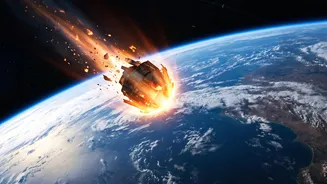
For decades, we have launched rockets, deployed satellites, and conducted missions, leaving behind a trail of non-functional objects. This includes everything from spent rocket stages and defunct satellites to tiny flecks of paint and fragments from past
collisions. Space agencies are currently tracking tens of thousands of objects larger than a softball, each moving at speeds fast enough to cripple or destroy an operational satellite on impact. The greater fear is a cascading chain reaction known as the 'Kessler Syndrome', where one collision creates a cloud of new debris, leading to more collisions, potentially rendering entire orbits unusable for generations. This junk poses a direct threat to the satellite infrastructure that powers our daily lives, from GPS navigation and weather forecasting to financial transactions and global communications.
The Rise of the Cosmic Cleanup Crew
In response to this growing threat, a new market for Active Debris Removal (ADR) is emerging. This is no simple task. Companies are developing a fascinating array of technologies to chase down and capture these tumbling, non-cooperative objects. Solutions range from robotic arms that can grab debris to giant nets, powerful harpoons, and even ground-based lasers designed to nudge objects into a new trajectory. Pioneers in this field, such as the Japan-based Astroscale and Swiss-based ClearSpace, have already conducted demonstration missions. Astroscale has tested magnetic docking systems, while ClearSpace was awarded a contract by the European Space Agency (ESA) for the first mission to remove a piece of debris from orbit. These efforts are moving from mere demonstrations to the beginnings of a commercial service industry.
Regulation Creates the Customer
For a long time, space debris was everyone’s problem but no one's responsibility to clean up. That is changing, primarily due to new regulations. Governments and international bodies are tightening the rules for satellite operators. A landmark move came from the US Federal Communications Commission (FCC), which now mandates that satellites be deorbited within five years of their mission's end, a dramatic reduction from the previous 25-year guideline. Similarly, the European Space Agency has adopted a 'Zero Debris Charter' and implemented its own five-year disposal rule for its missions. These regulations are creating a guaranteed market. If a satellite fails and cannot deorbit itself, its operator may soon be required to pay a service provider to remove it to stay compliant, transforming a public good problem into a paid service.
Commercial Demand and Key Players
Beyond regulation, pure commercial interest is a powerful driver. Companies operating satellite mega-constellations for global internet, like SpaceX's Starlink and Amazon's Project Kuiper, have billions of dollars invested in orbit. They have a direct financial incentive to keep their orbital paths clear and mitigate collision risks. This creates demand from commercial operators, who are expected to be the largest end-user segment. This has spurred a wave of innovation from both established aerospace giants like Northrop Grumman and Airbus, and a host of agile startups. While North America and Europe are currently the largest markets, the Asia-Pacific region is projected to be the fastest-growing, with countries like Japan, China, and India increasing their investments in space infrastructure and sustainability.