







The Proving Ground: A Treacherous Ghat Section
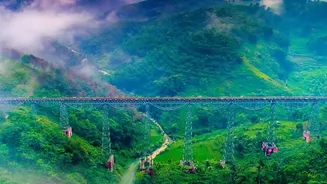
The focus of these intensive trials is the Sakleshpur-Subrahmanya Road ghat section in Karnataka’s Western Ghats. This 55-kilometre stretch, part of the vital Bengaluru-Mangaluru line, is an engineer’s nightmare and a testament to the challenges of Indian
geography. The route features a steep gradient of 1 in 50, meaning the track rises one metre for every 50 metres travelled. Compounding this are 108 sharp curves, 57 tunnels, and 226 bridges packed into this short distance. This terrain is not only difficult to navigate but is also highly susceptible to landslides, especially during the monsoon season, which has previously disrupted services for days. Due to these inherent dangers, the Commissioner of Railway Safety has historically capped speeds on this section at just 30 kmph, making it a true test of a train's stability and control.
A Special Vande Bharat for a Special Task
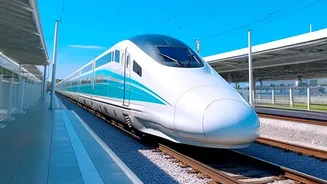
Conventional trains often need the help of extra 'banker' locomotives to push them up steep inclines and provide additional braking power on the way down. However, the Vande Bharat Express, with its distributed power system, is a different class of machine. For these trials, a specially manufactured 20-car rake was sent from the Integral Coach Factory (ICF) in Chennai. The key technology under the microscope is its Automatic Emergency Braking (AEB) system. This advanced safety feature was a specific requirement from the Research Designs and Standards Organisation (RDSO) for operating on this demanding route. The AEB system is designed to constantly monitor the train's speed and can automatically apply the brakes if it exceeds the prescribed limits for the section, a crucial safeguard on such a steep and winding corridor.
The Moment of Truth on the Rails
Beginning in mid-August 2026, the Mysuru Division of South Western Railway commenced a series of field trials scheduled to last several days. With personnel from RDSO on board, the Vande Bharat rake was put through its paces. These tests are far more than a simple speed run. They are a comprehensive evaluation of the train's behaviour under the most strenuous conditions. Engineers are closely monitoring its acceleration on inclines, stability on sharp curves, and, most importantly, its braking performance. The trials involve assessing how the train handles the ghat section's unique operational challenges and validating the effectiveness of the automatic emergency braking system in a real-world environment.
Why This Test Is a Game-Changer
The successful completion of these trials will be a landmark achievement for Indian Railways. It will not only pave the way for launching a Vande Bharat service connecting the tech hub of Bengaluru with the coastal city of Mangaluru, but it will also serve as a powerful validation of the train's engineering and safety credentials. Proving that the Vande Bharat can safely and reliably operate on one of the nation's most difficult railway lines opens the door for its deployment on other challenging routes across the country. These tests are a critical step in building confidence in the 'Make in India' trainset's ability to conquer diverse and difficult terrains, from high-speed flatlands to treacherous mountain passes.