




A New Breed of Climate Warrior
Indian Institute of Technology Madras has recognized that the complex challenges of climate change require a new, hybrid expertise. The institute is offering an Inter-disciplinary Dual Degree (IDDD) that allows its engineering students to gain a Master's
in fields like Data Science or Atmospheric and Climate Sciences alongside their primary B.Tech degree. This five-year program is designed to create a new generation of specialists who can speak both the language of their core engineering discipline and the language of data-driven climate modelling. By allowing an undergraduate in, for example, Civil or Mechanical Engineering to simultaneously earn a Master's in Data Science, the program directly addresses the need for domain-specific knowledge in the application of complex computational methods.
The Computational Toolkit
The core of this approach lies in applied computing. Students are equipped with a formidable toolkit to decipher the planet's most complex systems. The curriculum focuses on AI, machine learning, data science, and high-performance computing to translate vast, chaotic datasets into actionable insights. This includes learning to build and run sophisticated computer simulations and models that can predict future climate patterns. For example, a key skill is using Computational Fluid Dynamics (CFD), a branch of science that simulates the movement of air and water, to model everything from ocean currents and atmospheric heat transport to the path of a cyclone. Students get hands-on training, often using real-world datasets to understand how to apply these advanced tools to analyse climate and energy data effectively.
How to 'Read' a Climate Problem
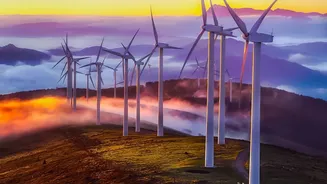
So how does this training help in reading and solving real climate problems? It allows engineers to move from theory to prediction. With these skills, a graduate can develop more accurate models for India's monsoon, a critical and complex weather system. They can simulate the impact of rising sea levels on coastal infrastructure, helping to plan resilient cities. They can use machine learning algorithms to optimize the placement of wind turbines or forecast solar power generation, accelerating the transition to renewable energy. These computational methods help quantify uncertainty in climate projections, providing more reliable data for policymakers. Problems like managing water resources, ensuring agricultural sustainability in a changing climate, and predicting extreme weather events become data-driven challenges that can be modelled and addressed with greater precision.
Who Is This For and Why It Matters
The IDDD programs are available to high-performing B.Tech students at IIT Madras, who can opt-in after their fifth semester. This structure ensures that students already have a strong foundation in a core engineering field before layering on the specialized computational skills. The goal is to produce uniquely qualified professionals ready for roles in government climate agencies, environmental research institutions, and the growing private sector of 'climate tech'. As India and the world grapple with their net-zero goals, the demand for experts who can design, analyse, and implement technology-based solutions is soaring. These graduates will not just understand the science of climate change; they will have the practical skills to build the tools needed to fight it, bridging the critical gap between raw data and sustainable action.