




The Unsung Hero: Coriander
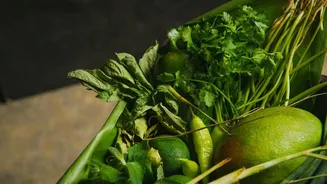
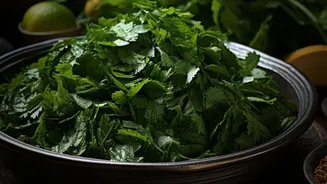
Let’s start with the quiet hero of our kitchens: coriander, or dhania. It is, without exaggeration, a foundational flavour of Indian cuisine. Its profile is complex yet accommodating—a little citrusy, a little earthy, and wonderfully aromatic. Think about
its role. Ground coriander seed is the backbone of countless masalas, from garam masala to sambar powder, providing body and balancing sharper spices. Fresh coriander leaves, tossed into a curry at the last second or sprinkled over a finished dal, add a burst of freshness that lifts the entire dish. It is a garnish, a base, and a flavour enhancer all in one. Coriander harmonises; it brings other ingredients together without shouting over them. It is the ultimate team player, happy to provide depth and character while letting others shine. Its presence is so integral that we often only notice it if it’s missing.
The Flavour Bully: Mint
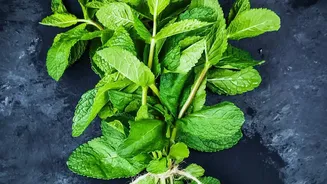
And then there is mint, or pudina. Mint is not a team player. Mint is a flavour bully. Its power comes from menthol, a compound that doesn't just add flavour but creates a physical cooling sensation in your mouth. This effect is so potent that it can trick your brain into perceiving the flavour as stronger and more intense than it actually is. While this cooling quality can be refreshing in a summer drink or a raita, in more complex blends it acts like a bulldozer. It flattens the nuanced warmth of cumin, the sweet heat of ginger, and the bright notes of coriander. Mint doesn’t blend; it dominates. It arrives with such force that it can mute the very flavours it's meant to accompany, leaving behind a single, piercing note of cool intensity.
The Green Chutney Battleground
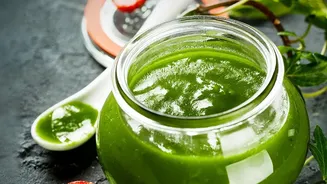
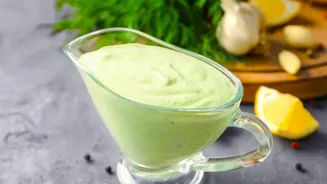
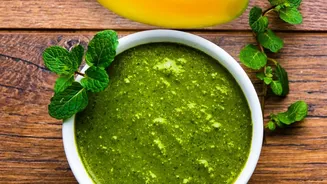
Nowhere is this conflict more apparent than in our beloved green chutney. A well-made hari chutney should be a vibrant chorus of flavours: the fresh kick of green chillies, the tang of lime, the earthiness of cumin, and the foundational freshness of coriander. Mint should be a high note in this chorus, not the lead singer. Yet, too often, an overabundance of mint turns it into a one-dimensional 'pudina chutney'. The balance is lost, and all the subtle complexities are wiped out by the aggressive coolness of menthol. Several recipes and home cooks recommend a ratio of two or even three parts coriander to one part mint, precisely to avoid this hostile takeover. The coriander provides the body and the core flavour, while the mint’s job is simply to add a refreshing accent.
Restoring the Rightful Balance
This is not a declaration of war on mint. Mint has its place. A fragrant pudina rice can be a delight, and a mint-laced raita is essential for cooling the palate. The argument is for proportion and respect for our ingredients. The headline says it all: mint should support, not dominate. Think of coriander as the reliable rhythm section of a band, providing the essential beat and structure. Mint is the lead guitar, brought in for a specific, powerful solo. You wouldn't play a blistering guitar solo over the entire song, and you shouldn't let mint run roughshod over your entire dish. When we throw in equal parts of both, or even more mint, we aren't creating a balanced blend; we are staging a coup. The goal is a harmonious composition where every ingredient can be tasted.