







The Global Litmus Test
Every quarter, the financial results of multinational corporations (MNCs) operating in India are scrutinized not just by investors, but by economists and analysts trying to gauge the country's economic pulse. These global giants, with their vast distribution
networks and diverse product portfolios spanning from shampoo to cars, provide a real-world stress test of the famed 'India growth story'. Their performance in the recently concluded April-June 2026 quarter offers a complex but insightful narrative. It reveals a market buoyed by resilient consumer demand and strong sales, but simultaneously challenged by persistent inflation and rising operational costs.
Consumer Goods: Revenue Up, Profits Under Pressure
The fast-moving consumer goods (FMCG) sector, a direct proxy for household spending, presented a united front on revenue growth. Hindustan Unilever (HUL), the Indian arm of Unilever, reported its highest quarterly sales expansion in 13 quarters. Its turnover jumped by around 10% to over ₹17,000 crore, driven by a healthy balance of both price increases and a 5% rise in underlying volumes. This suggests that consumers are not only paying more but are also buying more. The strong performance was broad-based, with the Home Care division growing 14% and the Beauty & Wellbeing business expanding 12%. However, the story on profitability was less rosy. HUL's net profit saw a slight dip, which the company attributed to a one-off tax credit in the previous year. More telling was the pressure on margins from commodity price volatility, a theme echoed across the corporate world.
Automobiles: Strong Sales Meet Rising Costs
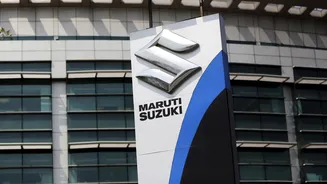
In the automotive sector, Maruti Suzuki, India's largest carmaker, showcased a similar pattern of robust demand clashing with cost headwinds. The company reported a massive 36% year-on-year surge in revenue, reflecting a significant 29.3% growth in vehicle sales. This growth was impressively balanced, with strong demand for both small cars and popular SUVs, and a healthy increase in exports. The company even managed to increase its domestic market share to 41.2%. Yet, despite selling more cars, its net profit declined by around 8-9%. The primary culprit was a sharp increase in expenses, particularly the cost of raw materials, which the company linked to geopolitical conflicts. This demonstrates that even with factories running at full tilt and strong consumer appetite, maintaining profitability is becoming a tougher challenge.
Industrials and Infrastructure: A Story of Strong Orders
Moving from consumer-facing sectors to the industrial side, the narrative shifts slightly towards future potential. Siemens India, a key player in heavy electrical equipment and infrastructure, posted a 15% rise in revenue for the quarter. More importantly, the company reported a 16.5% increase in new orders, signaling strong domestic demand from both private and public sector clients. Sunil Mathur, the CEO of Siemens, highlighted that this growth was driven by the Smart Infrastructure business. Like its peers in other sectors, however, Siemens also saw its profitability from continuing operations impacted by higher commodity prices and material costs, leading to a decline in net profit from its core business. The overall net profit saw a massive jump, but this was due to a one-time gain from the sale of a business unit.
The Verdict on the Growth Story
So, what does this all mean for the India growth story? The June-quarter earnings from these multinational bellwethers confirm that the top-line narrative is impressively intact. Indians are buying more cars, more soaps, and more of everything in between. The demand engine of the economy is firing strongly. However, the bottom-line story is one of caution. Persistent inflation in raw materials and other input costs is squeezing margins, forcing companies to walk a tightrope between raising prices and sustaining volume growth. While revenue is climbing, profitability is under duress. This suggests that the Indian market remains a land of immense opportunity, but one that requires careful navigation of economic crosscurrents.