







A World in Miniature
In the heart of Hamburg, Germany, lies a testament to human imagination and meticulous engineering: Miniatur Wunderland. Voted Germany's most popular tourist attraction, it is the world's largest model railway system, but it has grown to be so much more.
It's a place where different hobbies, once confined to separate basements and clubhouses, have converged. Here, model trains don't just run on tracks; they are part of a living, breathing ecosystem that includes self-driving cars, navigating ships, and even a fully operational airport. It began in 2000 when twin brothers Frederik and Gerrit Braun decided to build the world's largest model railway. What started with three completed sections in 2001 has since expanded into a sprawling universe depicting parts of Germany, the Alps, Italy, North America, and Scandinavia in breathtaking detail.
The Heartbeat: Model Trains
The railway is the circulatory system of this miniature world. With a Guinness World Record for the longest track, stretching over 15,715 meters, the scale is staggering. This isn't a simple loop of track. It's a complex network where around 1,200 digitally controlled trains pull over 12,000 wagons through detailed landscapes. They climb mountains in the Austrian Alps, speed through tunnels, and pull into bustling city stations like a miniature Hamburg Hauptbahnhof, which sees 1,500 train arrivals daily. Every 15 minutes, the entire world transitions from day to night, and the trains' headlights cut through the darkness, creating an entirely new, magical atmosphere.
Beyond the Rails: Cars and Ships
What truly sets a place like this apart is its integration of other modes of transport. In the fictional city of Knuffingen, a groundbreaking car system brings the streets to life. Over 100 cars and trucks appear to drive independently, stopping at traffic lights, using indicators, and even making way for emergency vehicles. Every 15 minutes, a building appears to catch fire, and a tiny fire brigade races to the scene to douse the flames. Elsewhere, in the Scandinavia section, massive container ships and cruise liners navigate real water. A sophisticated control system manages the tides, allowing the ships to realistically move through canals and dock at ports, adding another layer of dynamic realism to the ever-moving world.
The Crown Jewel: A Working Airport
Perhaps the most astonishing feat of engineering is Knuffingen Airport. Six years and four million euros in the making, this 150-square-meter marvel is a world unto itself. Around 52 aircraft, from small Cessnas to giant A380s, taxi to the gates, are pushed back, and line up for takeoff. Using a sophisticated catapult system, planes accelerate down the runway and actually lift into the air before disappearing behind a curtain. With realistic engine sounds and lighting, the airport simulates around 250 takeoffs and landings every day. It is supported by a fleet of 90 ground vehicles, including catering trucks and baggage carts, making it one of the most complex and captivating displays in the miniature world.
The Art of the Small
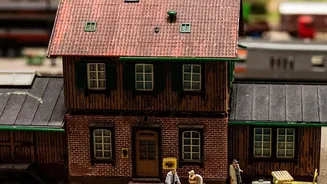
Looking past the incredible technology, the true magic lies in the details. The world is populated by nearly 290,000 tiny figurines, each one telling a story. You might find concertgoers at a festival, hikers on a mountain trail, or police investigating a humorous crime scene. These miniature narratives are a testament to the builders' passion and sense of humor. The entire exhibition is a love letter to the real world, captured at a 1:87 scale. It’s a celebration of engineering, from the complex software that runs the entire system to the hand-painted details on a single tiny figure. The project is constantly expanding, with sections for South America and Asia already in the works, promising that this miniature world will continue to grow.