








Why Yoga Helps Digestion
Yoga is more than just stretching; it's a way to connect mind and body. For digestion, this connection is key. The practice stimulates the parasympathetic nervous system, often called the 'rest-and-digest' system. When you're relaxed, your body can focus
on digesting food properly. Certain poses, particularly twists and gentle compressions, act like a massage for your internal organs. This action can improve blood flow, help move trapped gas, and encourage regular bowel movements, making it an effective tool against bloating and constipation.
Cat-Cow Pose (Marjaryasana-Bitilasana)
This dynamic movement is a perfect warm-up for the spine and abdomen. Start on your hands and knees in a 'tabletop' position, with your wrists under your shoulders and your knees under your hips. As you inhale, drop your belly towards the floor, lifting your chest and tailbone to arch your back into Cow Pose. As you exhale, round your spine toward the ceiling, tucking your chin to your chest and pressing into your hands for Cat Pose. This flow between poses gently massages your abdominal organs, stimulates blood flow, and can relieve bloating. Repeat for 8-10 breaths, moving smoothly with your breath.
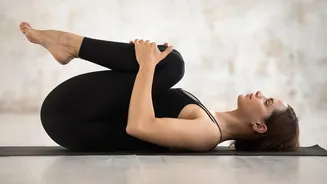
Wind-Relieving Pose (Pawanmuktasana)
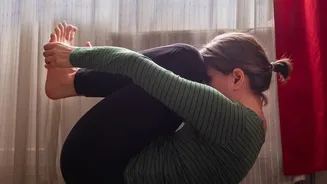
As the name suggests, this pose is excellent for releasing trapped gas. Lie on your back with your legs extended. As you exhale, draw one knee toward your chest, clasping your hands around your shin or behind your thigh. Hold this position for 5-10 deep breaths, feeling a gentle compression on one side of your abdomen. This pressure helps massage the intestines. Release the leg and repeat on the other side. For a deeper release, you can then draw both knees into your chest, hugging them gently. Rocking softly from side to side can also give your lower back a nice massage.
Supine Spinal Twist (Supta Matsyendrasana)
Twists are known for their detoxifying benefits and their ability to stimulate digestion. Lie on your back and hug both knees to your chest. Extend your arms out to the sides in a 'T' shape. On an exhale, gently lower both knees to your right side, keeping both of your shoulders grounded on the floor. If your knees don't comfortably reach the floor, you can place a pillow or block under them for support. Turn your head to the left if it feels comfortable for your neck. This gentle wringing action compresses and then releases the digestive organs, encouraging fresh blood flow. Hold for 30 seconds to a minute before returning to the center and repeating on the left side.
Child's Pose (Balasana)
This is a restorative pose that offers gentle compression for the abdomen while calming the nervous system. Start on your hands and knees, then sit back on your heels. You can keep your knees together or take them wide apart. Fold forward, resting your torso between your thighs and letting your forehead rest on the floor. Your arms can be stretched out in front of you or resting alongside your body. Breathing deeply in this pose creates a gentle pressure on your belly, which can help soothe an upset stomach and relieve stress that contributes to digestive issues.
Creating Your Gentle Routine
Weaving these poses into a short, daily routine can bring significant digestive comfort. Try to practice on an empty stomach, perhaps first thing in the morning or a few hours after a meal. Start with a few rounds of Cat-Cow to warm up. Follow with the Wind-Relieving Pose and the Supine Spinal Twist. End your practice by resting in Child's Pose for a few minutes, focusing on slow, deep breaths. The key is consistency and listening to your body. Start with a few minutes each day and notice how this gentle practice can support your digestive wellness.