



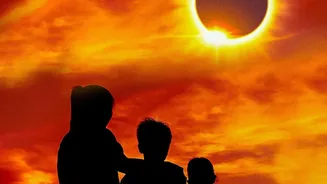
The Golden Rule: Safety First
Photographing a lunar eclipse is perfectly safe, as it's no brighter than a regular full moon. However, photographing a solar eclipse is extremely dangerous without proper protection. Never look at the sun directly—not even for a second—through your naked
eyes, sunglasses, or a camera's optical viewfinder without a certified solar filter. Doing so can cause solar retinopathy, a condition that can lead to permanent vision loss. The intense sunlight can burn your retina without you feeling any pain, with symptoms sometimes appearing hours later. This warning also applies to your camera; pointing an unfiltered lens at the sun can fry the sensor and other internal components.
Essential Gear for Solar Eclipse Photography
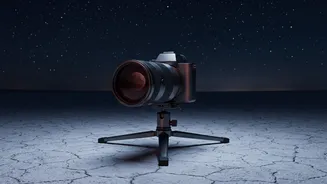
To shoot a solar eclipse safely, you need a special-purpose solar filter that attaches to the front of your lens. These filters must meet the ISO 12312-2 international safety standard. Standard neutral density (ND) filters, even strong ones, are not sufficient as they may not block the harmful infrared and ultraviolet radiation. Beyond the filter, a sturdy tripod is crucial for stability, especially when using a long lens. A telephoto or super-telephoto lens (400mm to 600mm or longer) will help you capture a detailed image of the sun's disk and its corona. Finally, a remote shutter release or using your camera's self-timer will prevent shake and ensure your images are as sharp as possible.
Camera Settings for a Solar Eclipse
With your solar filter attached, switch your camera to Manual mode. Turn off autofocus and manually focus your lens to infinity; using the live view screen and zooming in on the sun's edge can help you achieve a sharp focus. For exposure, a good starting point is an aperture of f/8 to f/16 and a low ISO, like 100 or 200, to minimize noise. Your shutter speed will vary depending on the density of your filter, but a range between 1/1000 and 1/4 of a second is common during the partial phases. It's highly recommended to practice on the sun on a clear day before the eclipse to dial in your exposure settings. During the event, use exposure bracketing (taking multiple shots at different shutter speeds) to increase your chances of getting the perfect shot.
Capturing Totality and Other Phenomena
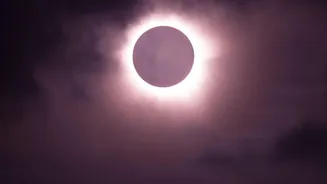
The most dramatic moments of a total solar eclipse happen just before and during totality. As the moon almost completely covers the sun, you might see Baily's Beads (points of light shining through lunar valleys) followed by the Diamond Ring effect (a single, brilliant flash). The moment totality begins is the ONLY time it is safe to remove your solar filter to photograph the sun's ethereal corona. During this brief period, you will need to adjust your exposures dramatically, as the corona is much fainter than the sun's surface. Be prepared to remove the filter just before totality and to replace it the instant the sun begins to reappear.
How to Photograph a Lunar Eclipse
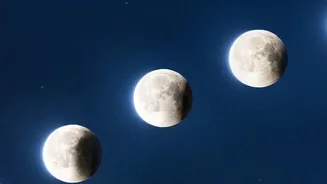
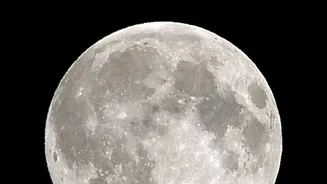
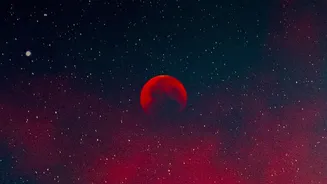
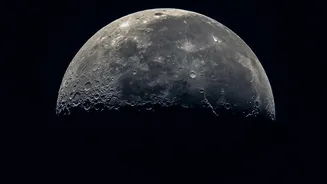
Photographing a lunar eclipse is a simpler and safer affair, as you are capturing reflected sunlight off the moon's surface. A tripod is still essential for stability during long exposures. Use a telephoto lens to get a close-up shot of the moon. Set your camera to manual mode, start with a low ISO (like 200 or 400), and a wide aperture (such as f/2.8 or f/4) to let in as much light as possible. Your shutter speed will change as the eclipse progresses. During the partial phases, it might be around 1/125s, but during the total phase, when the moon is dim and red, you may need much longer exposures of several seconds.
Tips for Smartphone Photographers
You can also capture an eclipse with your smartphone, but safety rules for solar eclipses still apply. You MUST use a certified solar filter placed over your phone’s camera lens; simply holding eclipse glasses over it can work. Never point your phone at the sun without this protection. Use a tripod to keep your phone steady, and lock the focus and exposure by tapping and holding on the screen. For a closer view, consider a clip-on telephoto lens designed for smartphones. Don't use the digital zoom, as it will only degrade the image quality.