




The Air Quality Takes a Tumble
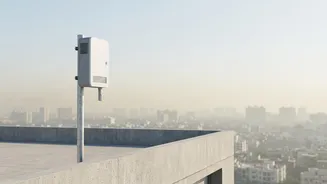
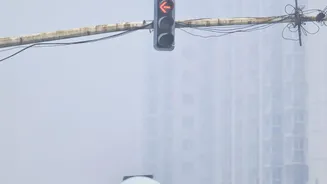
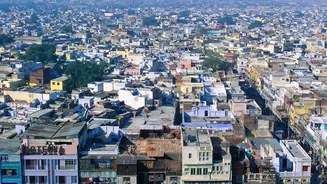
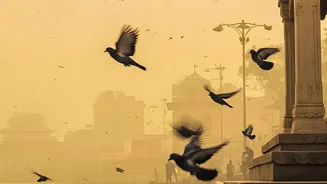
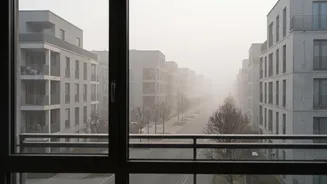
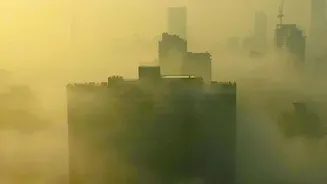
After a relatively clean September, the air quality in the National Capital Region has seen a sharp decline in the first week of October. Data shows that the average Air Quality Index (AQI) has climbed into the 'moderate' and, in some areas, 'poor' categories.
On October 7, the capital recorded its most polluted first week of October in three years, with an average AQI of 171. Areas like Mundka, Narela, and Dwarka have recorded 'poor' air quality, with PM10 and PM2.5 being the dominant pollutants. This dip marks the end of the monsoon's clean-up act and the beginning of a period where weather and pollution sources combine to create a toxic cocktail.
What is a 'Less Dispersive' Atmosphere?
The headline's term, 'less dispersive atmosphere', is key to understanding the current situation. Think of the atmosphere like a giant exhaust fan. During windy and warmer days, this fan is on high, carrying pollutants up and away. This is a 'dispersive' atmosphere. However, as winter approaches, temperatures begin to drop and wind speeds fall. This creates a stable, stagnant layer of cool air near the ground, a phenomenon known as temperature inversion. This heavy, calm air acts like a lid, trapping pollutants from vehicles, industry, and dust close to the surface. The atmosphere's ability to disperse these particles weakens significantly, causing pollution levels to build up rapidly, even if daily emissions remain the same. The ventilation index, a measure of the atmosphere's ability to clear pollutants, is currently low, contributing to the problem.
The Stubble Burning Factor
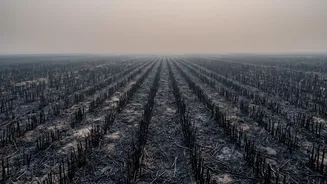
While atmospheric conditions are the immediate trigger, the contribution from farm fires cannot be ignored. In the neighbouring states of Punjab and Haryana, the post-harvest season for paddy leads to the widespread burning of crop residue, or stubble. As of early October, the number of stubble-burning incidents has started to rise. Winds from the northwest carry this smoke directly towards Delhi-NCR, adding a significant load of PM2.5 particles to the already trapped local pollution. While the contribution from stubble burning is currently low compared to the peaks seen in late October and November, it is a growing factor that will increasingly influence air quality in the coming weeks.
What Are The Authorities Doing?
In response to the deteriorating air, the Commission for Air Quality Management (CAQM) has a pre-emptive strategy called the Graded Response Action Plan (GRAP). The plan is implemented in stages based on AQI levels. Stage 1, which corresponds to 'Poor' air quality (AQI 201-300), has already been invoked. This stage focuses on controlling local sources of pollution. Measures include strict enforcement of dust control norms at construction sites, mechanised sweeping and water sprinkling on roads, and a ban on open waste burning. This year, the rules have been tightened; restrictions on certain inter-state buses and diesel generator sets now kick in at Stage I instead of Stage II. The 'No PUCC, No Fuel' rule is also being strictly enforced to ensure vehicles have valid pollution certificates.
How to Protect Your Health
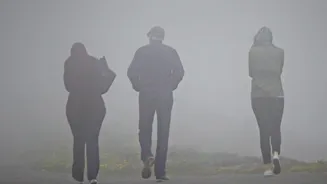
When the air quality is poor, it's crucial to take personal protective measures. Exposure to high levels of pollution can cause coughing, throat irritation, and shortness of breath, and can worsen existing respiratory and heart conditions. Health experts advise vulnerable populations—including children, the elderly, and people with asthma or heart disease—to be especially careful. It is best to limit time spent outdoors, especially during early morning and late evening when pollution levels are often at their highest. Avoid strenuous activities like jogging or cycling outside. If you must go out, wearing a well-fitted N95 or FFP2 mask can help filter out harmful pollutants. At home, using an air purifier can significantly improve indoor air quality. Keep windows and doors closed to prevent polluted air from entering.