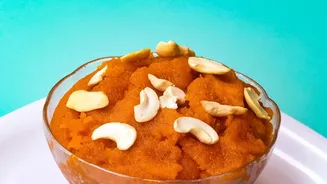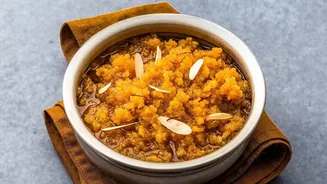






Craving a dessert that is both comforting and unique? Shakarkandi ka Halwa, or sweet potato halwa, is a delightful Indian sweet that is surprisingly easy to make and offers a beautiful, earthy sweetness that is hard to resist.
A Festive Favourite for a Reason
While perhaps not as famous
as its carrot or sooji counterparts, sweet potato halwa holds a special place in Indian households, especially during fasting periods like Navratri or Mahashivratri. Its appeal lies in its simplicity and wholesome nature. Sweet potatoes are naturally sweet, which means you often need less sugar compared to other desserts. They are also a good source of fibre and vitamins, making this a relatively nutritious indulgence. There are two main methods to prepare the sweet potato: boiling and mashing, or grating it raw. Most cooks prefer to boil or steam the sweet potatoes first, as this removes any raw taste and results in a smoother texture. This method is also generally faster.
Gathering Your Ingredients
This recipe requires just a handful of common kitchen ingredients. For about four servings, you will need: two large sweet potatoes (about 500-700 grams), four to five tablespoons of ghee (clarified butter), half a cup of sugar or jaggery, half a cup of milk, half a teaspoon of cardamom powder, and a mix of your favourite nuts like cashews and almonds for garnish. A few strands of saffron soaked in warm milk can be added for a lovely aroma and colour. Good quality ghee is recommended as it significantly enhances the flavour of the halwa.
Step-by-Step to a Perfect Halwa
First, prepare the sweet potatoes. Wash them thoroughly and cook them until tender. You can do this by steaming them for about 20 minutes, boiling them, or pressure cooking for 4-5 whistles. Once they are cool enough to handle, peel the skin and mash them well with a potato masher or a fork, ensuring there are no large lumps. Next, heat the ghee in a heavy-bottomed pan or kadai over medium heat. If you're using nuts for garnish, you can fry them in the ghee until golden brown, then set them aside. In the same pan, add the mashed sweet potato. Sauté this mixture, stirring continuously for about 8-10 minutes. The goal is to roast the sweet potato until it darkens slightly, becomes fragrant, and starts to pull away from the sides of the pan. Now, add your sweetener—sugar or jaggery—and milk. The mixture will become loose and a bit runny as the sugar melts. Continue to cook, stirring regularly, until the milk is absorbed and the halwa thickens again. This might take another 5 to 10 minutes. The halwa is ready when it forms a single mass and you see the ghee separating at the sides.
Finishing Touches and Pro Tips
Once the halwa reaches the desired consistency, turn off the heat. Stir in the cardamom powder and any other flavourings like nutmeg or saffron-infused milk. Finally, fold in the roasted nuts you set aside earlier, reserving some for a final garnish. For the best flavour, serve the sweet potato halwa warm. A key tip is to adjust the sugar based on the natural sweetness of your potatoes; taste them after boiling to gauge how much sugar you'll need. Continuous stirring is crucial, especially after adding the sweet potato mash, to prevent it from sticking to the bottom of the pan and burning.
Delicious Variations to Explore
While the classic recipe is a star on its own, you can easily adapt it. For a richer, creamier texture, some recipes call for adding khoya (milk solids) along with the milk. You can also experiment with different nuts and dried fruits like pistachios, walnuts, or raisins. For added aroma, a pinch of cinnamon or nutmeg powder works wonderfully with the cardamom. Some versions even create a paste of almonds and cashews to stir into the halwa for extra richness. Using jaggery instead of sugar will give the halwa a deeper, more caramel-like flavour and a darker colour.