









An ambitious plan to launch India's first airline from the co-operative sector has received a green light from the Kerala government, sparking hope for affordable regional travel. But what is this unique project and why hasn't it taken to the skies yet?
A Vision for Co-operative Skies
In late October 2026, Kerala's Chief Minister V.D. Satheesan announced that the government had approved the Keralam Civil Aviation Development Cooperative Society's proposal to launch flight services. Tentatively named 'Co-Keralam', the airline aims to be a pioneering venture in India's aviation history, funded and run on a co-operative model. The project is to be spearheaded by C.N. Vijayakrishnan, a prominent figure in Kerala's co-operative sector and the chairman of the MVR Cancer Centre and Research Institute. The stated goal is to make domestic air travel faster and more affordable, enhancing regional connectivity.
The Proposed Plan of Action
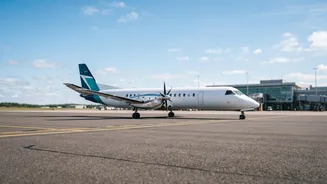
The initial blueprint for Co-Keralam is to lease two 72-seater aircraft, with Kochi as its operational hub. The proposed network aims to connect Kerala with key destinations in southern India, including Kozhikode, Kannur, Bengaluru, Mangaluru, Chennai, Coimbatore, and Madurai. Fares are projected to be in the range of ₹3,500 to ₹7,000, with an eye on expanding the fleet to four and eventually six aircraft as operations stabilize and grow. The model is intended to mirror the successful public-private partnership of Cochin International Airport, which also involved a broad base of investors.
Funding from the Grassroots
Unlike traditional airlines that rely on large corporate investors or government bailouts, Co-Keralam plans to draw its financial strength from Kerala's robust co_operative movement. The financing model involves around 200 co_operative societies each investing ₹2 crore, which would create a substantial initial capital pool of around ₹400 crore. Promoters have emphasized that the venture would not require direct financial assistance from the state government, instead leveraging the collective economic power of the co_operative sector. This move is seen as a significant expansion for the co_operative movement, venturing into a capital_intensive industry far beyond its usual domains of banking and agriculture.
Why Operations are Still Pending
While the government's approval is a major milestone, it is just the first step in a long and complex process. The airline must still navigate the stringent regulatory landscape of Indian aviation, which includes securing all necessary clearances and an Air Operator Certificate (AOC) from the Directorate General of Civil Aviation (DGCA). This process involves multiple stages, including demonstrating the capability to safely operate and maintain aircraft. Furthermore, the commercial aviation sector is notoriously difficult, marked by intense competition, volatile fuel prices, and high operational costs. The airline's ability to secure favourable aircraft leasing terms and maintain its proposed affordable fares will be critical to its long_term survival.
Learning from Past Hurdles
The path to launching a Kerala_based airline has been challenging for others. Earlier in 2026, other private airline projects like Air Kerala and Alhind Air faced significant headwinds. These ventures struggled with financial constraints, global geopolitical tensions, and a difficult aircraft leasing market where lessors demanded hefty advance payments or large liquidity proofs. These challenges highlight the formidable barriers that any new airline, including a co_operative one, must overcome. Issues like aircraft availability, strained by global supply chain disruptions, remain a major obstacle for startups.