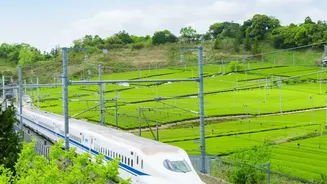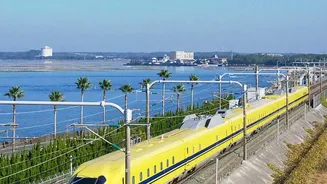



The Shinkansen Dream
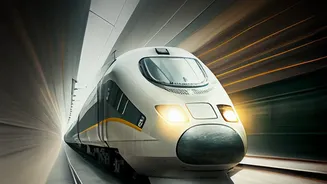
The foundation for the Mumbai-Ahmedabad High-Speed Rail (MAHSR) corridor was laid in 2017, marking a significant partnership with Japan. The project promised to bring Japan's iconic Shinkansen technology to India, slashing the travel time between the two
financial hubs from over six hours to just about two. Spanning 508 kilometres with 12 stations across Maharashtra and Gujarat, it was envisioned as a landmark of modern engineering, featuring viaducts, river bridges, and India's first undersea rail tunnel. More than just a fast train, it was presented as a catalyst for economic growth and a testament to India's burgeoning infrastructure prowess. The project is being implemented by the National High Speed Rail Corporation Limited (NHSRCL).
Reality on the Ground
The initial optimism soon met the harsh realities of executing a mega-project in India. The most significant bottleneck has been land acquisition, particularly in Maharashtra, which led to prolonged delays. Differing policies between the central government and state governments created hurdles that slowed momentum for years. This struggle fundamentally altered the project's trajectory, pushing back deadlines and creating a ripple effect across the entire construction schedule. The experience has served as a powerful lesson in the complexities of coordinating between multiple government bodies and managing local concerns for future infrastructure projects.
Shifting Timelines and Budgets
The initial completion target has long since passed, replaced by a more pragmatic, phased approach. According to recent announcements by Union Railway Minister Ashwini Vaishnaw, the first section is expected to become operational in 2027, likely starting with the Surat-Bilimora stretch in Gujarat. The entire 508-km corridor is now anticipated to be completed by 2029 or 2030. These delays have had a significant financial impact. The project's cost has nearly doubled from its original estimate of around ₹1.1 lakh crore to a revised figure of approximately ₹2.1 lakh crore. This escalation is attributed to land acquisition delays and procurement challenges.
A Tale of Two States
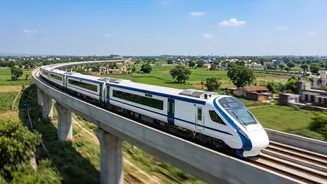
The project's progress has been markedly different in Gujarat compared to Maharashtra. With land acquisition and approvals moving more smoothly in Gujarat, construction has advanced at a significant pace. As of late 2026, hundreds of kilometers of viaducts and piers have been erected, multiple river bridges are complete, and station work is visibly progressing in cities like Surat and Bharuch. In contrast, the Maharashtra section, which includes the complex 21-km undersea tunnel, lagged for years due to political and administrative hurdles. This disparity led to a strategic shift: focusing on completing and operationalizing the Gujarat section first to demonstrate tangible progress.
The 'New Context' Today
The new context of the bullet train project is one of tempered realism and phased execution. The dream of a single, swift launch has given way to a strategy of opening the corridor section by section. There's also a growing emphasis on 'Atmanirbhar Bharat' (self-reliant India). While the core technology is Japanese, India is developing its own indigenous high-speed train prototype, with the first coach body recently completed for testing. This India-made train is expected to undergo track tests by mid-2027. This dual approach—adopting foreign technology while building domestic capability—is a key part of the project's evolved identity. It is no longer just about building a railway line but about creating an entire high-speed rail ecosystem in the country.