







The Internet's Invisible Highways
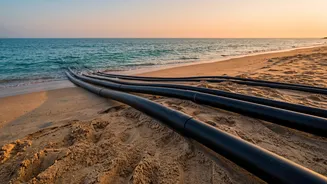
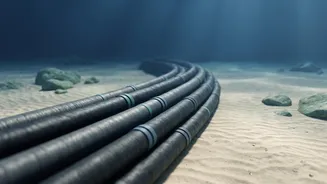
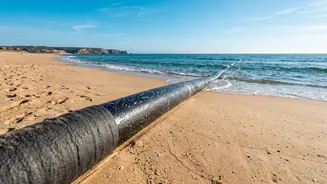
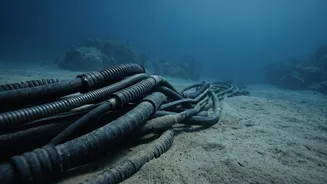
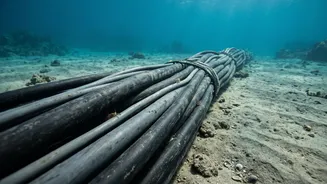
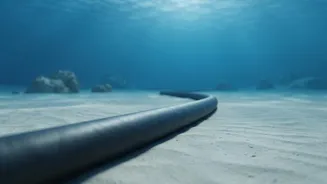
Contrary to the popular image of data beaming from satellites, over 95% of all global internet traffic travels through a vast network of fibre-optic cables laid on the ocean floor. These submarine cables are the true backbone of our connected world, acting
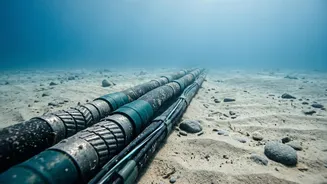
as high-capacity, low-latency highways for everything from financial transactions to streaming services. Each cable, though only a few inches thick, is a marvel of engineering, bundled with protective layers to withstand deep-sea pressure and hazards. They connect to land at ‘cable landing stations,’ which then plug into the country's terrestrial data networks. For a nation that accounts for a fifth of the world’s data consumption, these cables are nothing short of critical infrastructure.
Mumbai's Magnetic Pull
India currently has around 18 international subsea cables connecting it to the world, landing in cities like Chennai, Kochi, and Tuticorin. However, the overwhelming majority, at least 13, come ashore near Mumbai. This concentration isn't accidental. As India's financial capital and a historic telecom hub, Mumbai has long been the logical gateway for traffic flowing west towards Europe, Africa, and the Middle East. Major telecom players like Tata Communications, Reliance Jio, and Bharti Airtel all operate landing stations in or around the city, making it the primary entry and exit point for India’s international data.
A Digital Choke Point
The clustering of so much critical infrastructure in one small area creates a massive single point of failure. Up to 95% of India's data traffic to the West flows through the cables landing at Versova. A significant disruption in this specific area could have immense consequences. The threats are varied. Accidental damage from ship anchors or fishing trawlers is the most common cause of cable faults globally, with 150-200 incidents per year. Natural disasters like earthquakes or undersea landslides also pose a risk. While deliberate sabotage is rare, the geopolitical implications of such an act are serious, as it could cripple communications and impact economic stability by slowing down banking, stock markets, and cloud services.
The Challenge of Age and Repair
Compounding the risk of concentration is the age of the infrastructure. At least 11 of India's 18 cables are over 20 years old, approaching their typical 25-year operational lifespan. While they still function, older cables have less capacity and are more prone to faults. When a cable does break, India faces another significant challenge: it does not have its own dedicated cable repair ships. This means the country is dependent on foreign vessels, often based in Singapore or the UAE, to carry out repairs. The process of getting permissions for these ships to operate in Indian waters can take weeks, significantly delaying restoration and prolonging any potential disruption.
Diversifying the Digital Lifeline
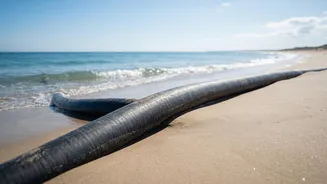
Recognising this vulnerability, both the government and private industry are taking steps to build a more resilient network. The focus is on diversification. Chennai, on the east coast, is being built up as a second major international gateway, handling traffic to Singapore and the rest of Asia. Several new, high-capacity cable systems are under construction, including 2Africa, MIST, IAX, and IEX, which are designed to create new routes and add significant bandwidth. New landing stations are being planned in locations like Digha in West Bengal and Machilipatnam in Andhra Pradesh to spread the infrastructure load and provide alternative pathways for data, ensuring that India's digital future doesn't hang by a few threads on a single beach.