






An Unprecedented Infrastructure Boom
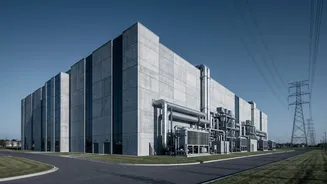
India's ambition to become a global AI powerhouse is being built on a foundation of concrete and silicon. The country is witnessing a historic surge in data center investment, with capacity expanding at a blistering pace. From just 375 megawatts (MW)
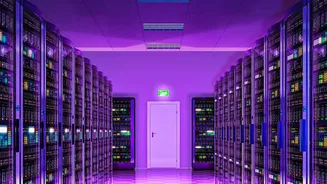
in 2020, India's data center capacity has already quadrupled to over 1.5 gigawatts (GW). This is just the beginning. Projections show a further explosion to between 5 and 10 GW by 2030, fuelled by billions in private and public investment. Initiatives like the national IndiaAI Mission, with an outlay of over ₹10,372 crore, are a core part of this push, aiming to build a scalable AI computing ecosystem. This mission involves deploying tens of thousands of Graphics Processing Units (GPUs)—the specialised chips that power AI—and making them accessible to startups and researchers at subsidised rates. This rapid build-out is designed to create 'sovereign AI' capability, ensuring India can train its own models on its own data.
The Soaring Cost of Power
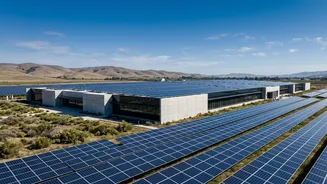
This massive expansion comes with an equally massive, and often overlooked, price tag: energy. AI data centers are notoriously power-hungry, consuming many times more electricity than traditional facilities. The International Energy Agency notes that global data center electricity consumption is soaring, and in India, this could rise from 0.8% of the national total to nearly 3% in the coming years. One expert estimates that building out 8-10 GW of AI data center capacity over the next six years could require a staggering ₹4 lakh crore investment in renewable energy alone just to meet the demand. For a single 100 MW facility, the annual power bill can range anywhere from ₹591 crore to ₹1,248 crore, a difference larger than the cost of the land it's built on. This makes power the single largest operating expense, accounting for up to 65% of a data center's ongoing costs. As India builds gigawatts of new capacity, this recurring expense threatens the long-term economic viability of its entire AI ecosystem.
Beyond the Electricity Bill
The long-term costs aren't limited to electricity. The hardware itself—primarily high-end, imported GPUs—represents a colossal capital outlay. Furthermore, these power-dense systems generate immense heat, requiring advanced and expensive cooling systems to function. Traditional air cooling is often insufficient, pushing the industry towards more complex liquid cooling solutions, which adds another layer of cost and complexity. There are also significant costs related to operational inefficiencies. One 2026 report highlighted that Indian mid-market companies are losing around 27% of their AI budgets to 'complexity overhead', which includes managing too many different tools and fixing flawed outputs. This waste, estimated at ₹33,000 crore annually for mid-market firms alone, demonstrates a critical gap between investment and realised value. For the nation's AI ambitions to be sustainable, the focus must shift from simply acquiring hardware to using it effectively.
The Efficiency Imperative
This is where 'efficient computing' becomes crucial. It’s not just about saving money; it’s about ensuring the AI boom can be sustained. Efficient computing involves a multi-pronged approach. First is software and model optimization, using techniques like approximate computing to reduce the computational load without significantly sacrificing accuracy. Second is a move towards more diverse and specialised hardware. While GPUs are the current workhorses, the industry is exploring other accelerators like Neural Processing Units (NPUs) that are designed for specific AI tasks and consume less power. Third is innovation in physical infrastructure, especially in cooling and power management. For India, this also presents a strategic opportunity. By strengthening partnerships between power utilities, hardware manufacturers, and grid planners, the country can pioneer sustainable AI infrastructure that aligns compute growth with environmental stewardship. The goal is to move from a mindset of 'time-to-market' to one of 'time-to-success', where the value generated by AI justifies the immense cost of running it.