






The Unexpected Force of a Raindrop
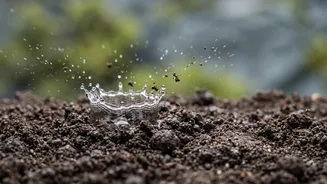
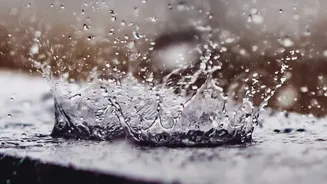
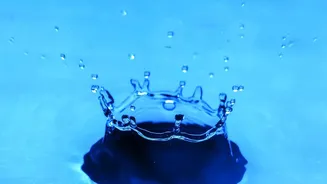
It’s a concept that feels counterintuitive: how can soft, liquid water wear away hard rock? The answer lies in physics. A single falling raindrop is not just a speck of water; it’s a tiny projectile that can reach speeds of up to 32 kilometres per hour.
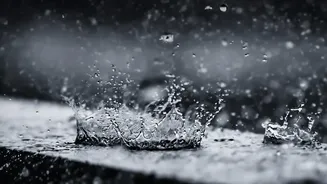
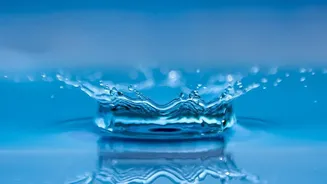
When it strikes a surface, it doesn't just splash—it delivers a focused burst of kinetic energy. Over centuries, the cumulative effect of billions of these impacts can wear down even the most resilient stone. However, a groundbreaking study from the University of Minnesota has found that the damage mechanism is even more dramatic than previously thought. The researchers discovered that the impact pressure isn't concentrated at the centre of the drop. Instead, as the droplet spreads, it creates a shock wave, releasing its energy explosively. Essentially, each raindrop behaves like a miniature bomb, creating microscopic stresses and cracks that, over time, lead to significant erosion.
More Than Just Physical Wear
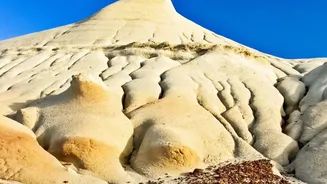
The damage isn't purely mechanical. Rainwater, especially in polluted environments, can be acidic. This acid rain reacts with minerals in carbonate stones like limestone and marble—common materials in many of India's ancient forts and temples—dissolving the calcite that binds the stone together. Furthermore, porous stone absorbs water, which can carry dissolved salts. As the water evaporates, these salts crystallise within the stone's pores, exerting immense internal pressure that fractures the material from the inside out. This process, known as salt crystallisation, is a hidden destroyer, causing the stone to crumble over time. The constant cycle of getting wet and drying out also causes the stone to expand and contract, weakening its internal structure and accelerating decay.
Why This Science Matters More Now
These new insights into rain erosion are becoming critically important in the context of a changing climate. Global weather patterns are shifting, leading to more frequent and intense rainfall events. Heavier downpours mean larger raindrops falling at higher velocities, which translates to significantly more kinetic energy upon impact and, therefore, accelerated erosion. For a country like India, with its priceless and irreplaceable stone monuments, from the rock-cut temples of Ellora to the marble marvel of the Taj Mahal, this is an urgent concern. What took millennia to form or build could see its rate of decay speed up dramatically in just a few decades. Scientists warn that climate change has become one of the most significant challenges facing the preservation of our global cultural heritage.
From Lab Insights to Heritage Protection
Understanding the precise mechanisms of rain erosion allows conservationists to develop more effective strategies. It’s no longer just about shielding stone from water, but about mitigating the specific effects of impact, chemical reactions, and salt crystallisation. This knowledge can inform the development of advanced protective coatings that don’t just repel water but also help consolidate the stone's surface against the explosive force of droplet impacts. It can also guide better maintenance routines for historical sites, ensuring that drainage is adequate to prevent water saturation and the destructive wet-dry cycles. For future construction, this research can influence the selection of more resilient building materials, ensuring that modern structures built to last can better withstand the intensifying weather of the coming decades.