








The Promise of Satellite Internet
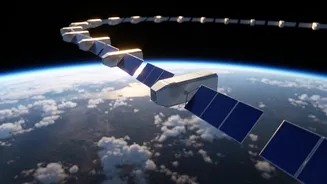
Starlink, operated by Elon Musk's SpaceX, isn't just another internet provider. It uses a massive constellation of small satellites in low-Earth orbit to provide high-speed, low-latency broadband. The key advantage is its ability to reach areas where
traditional infrastructure, like fibre optic cables and cell towers, is difficult or impossible to build. For a country with vast rural and remote territories, this technology could be a game-changer, connecting underserved communities, supporting telemedicine, and providing crucial backup during natural disasters. The goal is to help achieve 100% connectivity across India, a vision championed by the government.
Infrastructure Ready, Beams Off
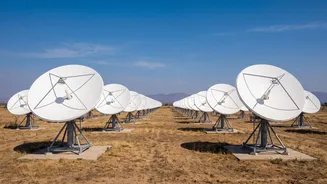
In a significant step, Starlink has confirmed its on-the-ground readiness. A senior SpaceX executive, Lauren Dreyer, announced at the India Mobile Congress 2026 that the company has built 20 gateway sites with hundreds of antennas across the country. These gateways are the critical link between the satellites in space and the terrestrial internet. Dreyer stated that Starlink's operations have been specifically designed for India, including establishing controls to ensure Indian user data stays within the country, a key regulatory demand. Despite the hardware being in place, Elon Musk has been clear: the satellite beams over India are turned off, and will remain so until all approvals are granted.
The Regulatory Maze
Getting the green light in India is a multi-step process involving several government bodies. While Starlink secured a crucial Global Mobile Personal Communication by Satellite (GMPCS) licence from the Department of Telecommunications (DoT) in June 2025, and subsequent authorisation from the space regulator IN-SPACe, it has not yet received final security clearances. These final approvals are reportedly held up by national security concerns from the Ministry of Home Affairs, which wants to ensure lawful interception capabilities and control over the satellite systems. The government has made it clear that all conditions, including local data storage and the ability to track user terminals, must be met before a launch can happen.
Competition and Controversy
Starlink isn't entering an empty market. It faces stiff competition from powerful domestic players. Reliance Jio's satellite arm and Bharti-backed Eutelsat OneWeb have also received GMPCS licenses and are racing to launch their own services. This competitive pressure has spilled into public view, with Elon Musk recently alleging that unnamed 'oligarchs' are blocking Starlink's entry to protect their 'monopolistic chokehold' on the Indian market. This adds another layer of complexity to the delays, suggesting that commercial rivalries, particularly around the method of spectrum allocation, are as much a hurdle as regulatory processes. While Starlink advocates for administrative allocation of spectrum, some local telecom giants have pushed for an auction.
What Happens Next?
Starlink maintains that it has spent five years working with Indian regulators to adapt its operations and is now simply waiting for the final nod. A company executive expressed hope that services could be authorised by early 2027. The ball appears to be in the government's court to grant the final security clearances and clarify spectrum allocation rules. For millions of Indians in hard-to-reach areas, the launch of satellite internet, whether from Starlink or its rivals, can't come soon enough. The current situation highlights a classic tension: the desire for transformative new technology clashing with national security, regulatory frameworks, and intense market competition.