



A 'Once-in-a-Century' Discovery
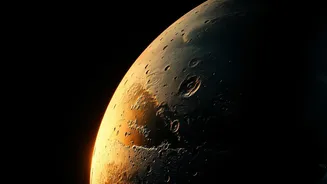
Scientists are buzzing about a newly identified crater on the Moon, a colossal bowl measuring 728 feet (222 meters) across and 141 feet (43 meters) deep. Dubbed McGetchin crater, it is the largest freshly formed impact site ever discovered in our solar
system. The impact, believed to have occurred between April and May of 2024, was caused by an asteroid or comet fragment striking the lunar surface. While the Moon is covered in craters, finding one so large and so new is exceptionally rare; an impact of this magnitude is estimated to happen only about once every 130 years. This provides scientists with an unprecedented opportunity to study the immediate aftermath of such a dramatic event before the harsh environment of space begins to wear it down.
How the Crater Was Found
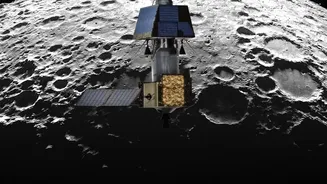
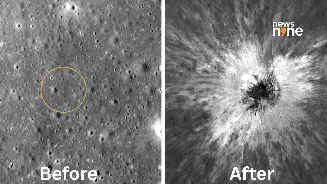
The discovery was not made in real-time but through careful analysis of images from NASA's Lunar Reconnaissance Orbiter (LRO). In October 2025, Robert Wagner, an image-processing specialist, was comparing lunar maps when he spotted an unusually bright feature surrounded by a dark halo that wasn't there in previous images. This led to a closer look using the LRO's powerful cameras, which confirmed the existence of the massive new crater. The LRO has been mapping the Moon for over 17 years, creating a priceless before-and-after photographic record that makes such discoveries possible. Without this long-term monitoring, a fresh impact like McGetchin could easily go unnoticed.
More Than Just a Hole
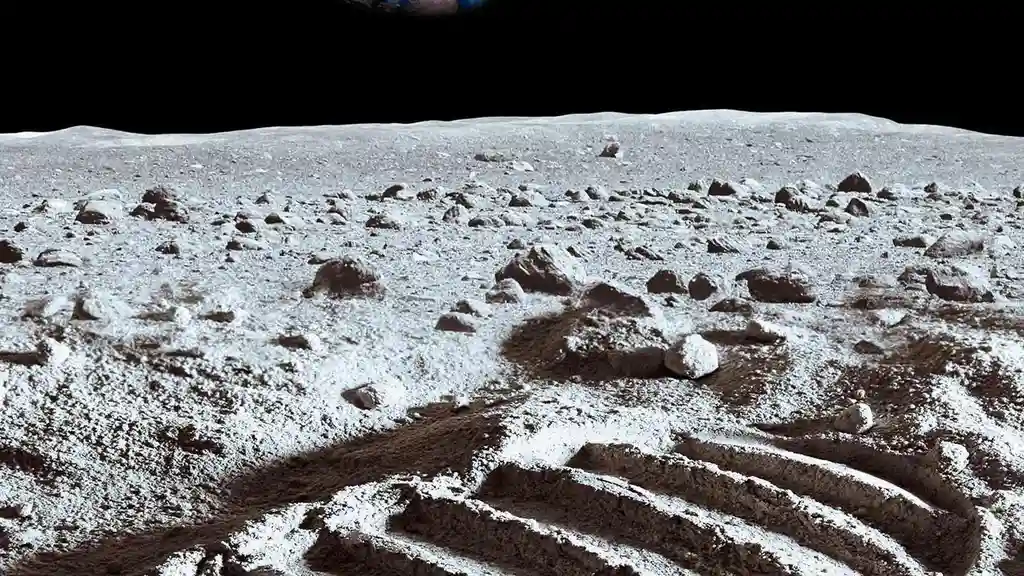
The effects of the impact extend far beyond the crater's rim. Follow-up observations revealed a four-mile-wide "cold spot" surrounding McGetchin. At night, this area is about 16 degrees Fahrenheit (9 degrees Celsius) cooler than the adjacent terrain. Researchers believe the shock of the impact violently disturbed and loosened the lunar soil, or regolith, reducing its density and, therefore, its ability to hold onto heat. This shows how a major collision can physically alter the lunar surface on a scale much larger than the visible crater itself, offering crucial insights for future missions. Understanding these soil properties is vital for planning the construction of lunar bases and for rover operations as part of NASA's Artemis program.
A Tribute to a Pioneer
The crater is officially named McGetchin by the International Astronomical Union in honour of Thomas R. McGetchin, a renowned American planetary scientist and volcanologist who passed away in 1979. He served as the Director of the Lunar and Planetary Institute (LPI) starting in 1977. Fittingly, McGetchin was instrumental in developing scientific models in 1973 that are still used today to understand how ejecta—the rock and dust thrown out by an impact—is distributed around craters. The new crater, with its bright, pristine ejecta blanket splashing out in all directions, is a perfect real-world example of the very processes he dedicated his career to studying.
Why This Discovery Matters for Us
Studying a fresh impact site like McGetchin is about more than just lunar geology. It provides a real-world laboratory for understanding the physics of planetary impacts. Every day, Earth is shielded by its atmosphere, which burns up most small space rocks. The Moon, having no atmosphere, preserves a record of these collisions. By observing a recent, large impact, scientists can refine their models about crater formation and energy release. This knowledge is not just academic; it directly informs planetary defense efforts here on Earth. Understanding how objects behave upon impact helps us better prepare for the potential threat of a near-Earth object, making the study of distant craters a vital part of protecting our own planet.