





A Fruit Woven into India’s Identity
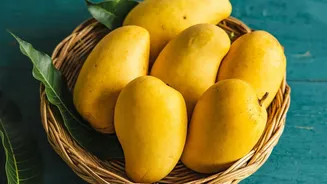
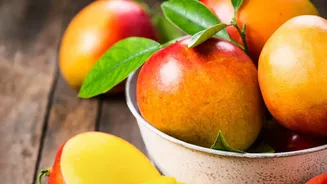
To understand mango diplomacy, one must first understand the mango's place in the Indian heart. It is more than just a fruit; it's a cultural phenomenon, hailed as the 'King of Fruits'. For millennia, mangoes have been intertwined with Indian life, appearing
in ancient scriptures, mythology, and literature as symbols of love, prosperity, and divinity. Lord Buddha is said to have meditated under a mango tree, and the fruit's paisley-shaped form is a classic motif in Indian art and textiles. The arrival of mango season is a nationwide celebration, a cherished time for families and communities to share in its sweetness. This deep cultural resonance makes the mango a uniquely potent tool for expressing goodwill.
The 18-Year Freeze
For decades, this cherished symbol of Indian culture was absent from American tables. In 1989, the United States banned the import of fresh Indian mangoes. The official reason was agricultural; the US Department of Agriculture (USDA) feared that pests like the fruit fly, potentially carried on Indian mangoes, could devastate American crops. For 18 long years, despite India's status as the world's largest mango producer, its famed Alphonso and Kesar varieties couldn't legally enter the lucrative US market. This trade barrier was a persistent, low-level irritant in the relationship, a source of frustration for Indian farmers and the growing Indian diaspora in America who longed for a taste of home.
The Breakthrough 'Mango Nuclear Deal'
The thaw came from the very top. During a landmark visit to India in March 2006, centered on finalizing a historic civil nuclear pact, US President George W. Bush was served an Indian mango. His reported verdict to Prime Minister Manmohan Singh: "This is a hell of a fruit." That moment was more than a culinary compliment; it was a catalyst. The two leaders agreed to work on resolving the issue. What followed was a classic diplomatic trade-off. The US would grant market access for Indian mangoes, and in return, India would ease import rules for Harley-Davidson motorcycles. This exchange, humorously dubbed the 'nuclear mango deal,' perfectly illustrated how a small cultural item could be leveraged to smooth over larger, more complex negotiations. In April 2007, the first official shipment of Indian mangoes in 18 years landed in the US, to significant media fanfare.
A Sweet Symbol of Soft Power
The lifting of the ban was far more significant than the trade volume it represented. It symbolized a new era of trust and cooperation. By resolving a long-standing, tangible issue, both nations demonstrated a willingness to find common ground. For India, it was a successful use of "soft power"—using cultural attractiveness to achieve foreign policy goals. The mango became a story that was easy for the public in both countries to understand and celebrate, a welcome relief from the often dry and complicated language of diplomacy. It represented the removal of barriers, the opening of channels, and a relationship maturing beyond just strategic concerns. The annual tradition of the Indian Embassy in Washington hosting mango-themed receptions became a popular highlight of the city's diplomatic calendar, a tangible taste of the growing partnership.