






Moving Beyond the Studio
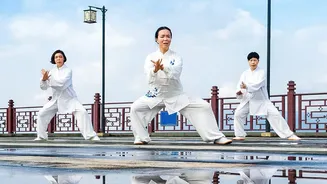
Practicing Tai Chi, an ancient Chinese martial art known for its gentle, flowing movements, is profoundly beneficial for mind and body. Typically taught in quiet studios or serene parks, the practice emphasizes balance, coordination, and a deep connection
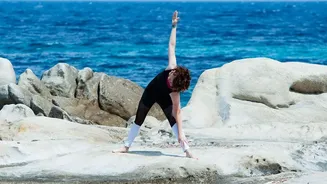
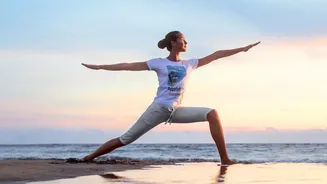
between thought and action. Taking this practice to the beach, however, introduces a new dimension. The environment is no longer a silent, static space. Instead, it is alive with sensory input: the vastness of the sky, the feel of uneven sand engaging your muscles, and, most importantly, the sound of the ocean. This dynamic setting encourages a heightened state of awareness, asking the practitioner to adapt and flow not just with their own internal energy, but with the energy of the natural world around them. The uneven surface of the sand provides a unique challenge, forcing the body to engage stabilizing muscles more deeply to maintain balance, which can lead to improved strength and muscle tone over time.
The Ocean's Natural Cadence
The sound of ocean waves is a form of natural white noise. It's repetitive and predictable, yet never perfectly uniform, creating a soothing auditory blanket that can mask distractions and calm the mind. This sound has a cyclical pattern—a gathering, a peak, and a release—that mirrors the fundamental rhythms of our own bodies, like our heartbeat and breath. In Tai Chi, breath is paramount; it is the anchor for every slow, deliberate movement. The ocean provides an external, audible guide for this internal process. The sound of a wave rolling in can be a natural cue to inhale, and its retreat back to the sea a cue to exhale. This process, sometimes called entrainment, is the synchronization of our internal biological rhythms with an external stimulus, which can help lower stress hormones and promote a state of deep relaxation.
Synchronizing Breath and Body
Using the waves as a guide can transform the practice from a series of memorized forms into a responsive dance with nature. A practitioner can consciously link their movements to the ocean's rhythm. As a wave gathers and rolls toward the shore, it can correspond with an expansive, opening movement and a deep inhalation. As the wave crashes and recedes, it can guide a contracting, closing movement and a full exhalation. This synchronization makes the mind-body connection tangible. It helps practitioners move away from mechanically performing the steps and instead feel the 'flow' that is central to Tai Chi philosophy—the continuous, uninterrupted movement often compared to a great river. This auditory cue helps maintain a steady, consistent pace, enhancing both focus and relaxation.
The Soothing Power of Blue Space
Beyond just the sound, scientific evidence highlights the profound psychological benefits of being near 'blue spaces' like oceans, lakes, and rivers. Research shows that exposure to these environments can lower heart rate, reduce blood pressure, and decrease levels of the stress hormone cortisol more quickly than even green spaces like forests. Combining physical activity with a blue space setting amplifies these mood-boosting effects. The vast, unbroken horizon of the ocean provides a visual escape, allowing the eyes and mind to rest from the constant focus on screens and close-up tasks that define modern life. This combination of soothing sounds, expansive views, and gentle movement creates a powerful formula for mental clarity and well-being, enhancing the meditative aspects already inherent in Tai Chi.
Tips for Your Beach Practice
If you're inspired to try beach Tai Chi, a little preparation can enhance the experience. Consider practicing at sunrise or sunset when the temperatures are cooler, the light is soft, and the beach is often less crowded. Wear comfortable clothing that allows for a full range of motion. While the sand adds a balance challenge, you can start on the firmer, wet sand near the water's edge before moving to softer areas. Begin by simply standing or sitting, closing your eyes, and listening. Don't force the connection; just notice the rhythm of the waves and the rhythm of your own breath. Allow them to naturally start syncing up before you begin your movements. Letting your breath guide you is a core principle of Tai Chi, and the ocean is the perfect teacher for learning how to listen.