





Following the Democratic sweep in the 2026 midterm elections, the balance of power in Washington has shifted. President Trump now faces a Congress controlled by the opposition, making one of his biggest remaining tools the presidential veto.
The Standard Veto Process
The most common
and straightforward way a president can block legislation is through a regular veto. Rooted in Article I, Section 7 of the U.S. Constitution, this power acts as a crucial check on Congress. When Congress passes a bill, it is sent to the White House. The president then has ten days (excluding Sundays) to act. A regular veto occurs when the president decides to reject the bill and sends it back to the chamber where it originated, along with a written message explaining his objections. This action stops the bill from automatically becoming law and sends a clear message of executive disapproval. The mere threat of a veto can also be a powerful tool, often forcing lawmakers to negotiate and change parts of a bill before it even reaches the president's desk.
The High Bar of a Veto Override
A regular veto is not the final word. The Constitution gives Congress a way to fight back through a process called an override. However, the threshold for a successful override is intentionally high to ensure there is significant bipartisan support for the legislation. To make a vetoed bill law without the president's signature, both the House of Representatives and the Senate must vote to override the veto with a two-thirds majority of members present in each chamber. Historically, overrides are rare. Following the 2026 midterms, while Democrats control both chambers, they do not hold the supermajorities needed to easily override a presidential veto on their own, which would require 290 votes in the House and 67 in the Senate. This means any attempt to override a Trump veto would require substantial Republican support, setting the stage for intense political battles.
The Pocket Veto: A More Absolute Power
A more obscure but equally powerful tool is the 'pocket veto'. Unlike a regular veto, which involves actively rejecting a bill, the pocket veto is passive. It can only be used under specific circumstances related to the congressional calendar. According to the Constitution, if the president receives a bill but does not sign it within the ten-day window, it automatically becomes law unless Congress adjourns during that period. If Congress adjourns, preventing the president from returning the bill with objections, he can simply do nothing—letting the bill expire. This is a pocket veto. The key difference is that a pocket veto cannot be overridden by Congress. The legislation is effectively dead, and lawmakers must reintroduce the bill and pass it all over again in the next session.
When Can a Pocket Veto Be Used?
The use of the pocket veto hinges on the definition of 'adjournment'. Historically, this power was most clearly applied at the end of a two-year Congress. However, its use during shorter breaks, like recesses between or within sessions, has been a subject of constitutional debate for decades. Past administrations and courts have gone back and forth on whether a president can use a pocket veto during these shorter adjournments, especially if Congress has designated an agent to receive presidential messages. Despite the ambiguity, the pocket veto remains a potent strategic option for a president, particularly to kill bills passed in the final, hectic days of a legislative session when returning a regular veto might be logistically difficult or politically inconvenient.
Trump's Veto Strategy in a Divided Government
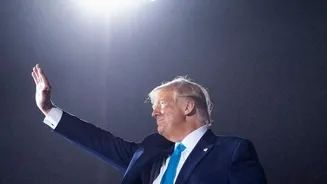
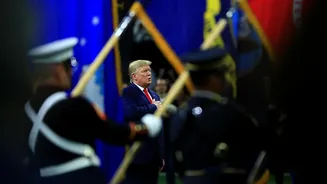
With Democrats now controlling Congress, President Trump's use of the veto is expected to become a central feature of his final two years in office. He has already signaled his intent, even posting an image of a red cap with the word 'VETO' on social media after the election results came in. During his first term, Trump used the veto ten times, with only one being overridden. In his second term, with a friendly Congress, he has used it sparingly. Now, facing a Democratic agenda, the veto allows him to block legislative priorities on everything from healthcare to environmental policy. While he has expressed a desire to make deals, the veto gives him the ultimate leverage, forcing the new Democratic majority to either compromise on their bills or face a legislative stalemate.