






A Bold New Mission
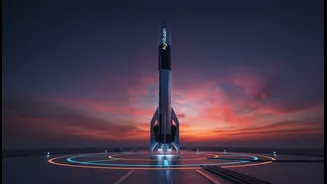
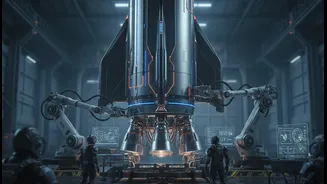
Following the successful launch of its Agnibaan Sub-Orbital Technology Demonstrator (SOrTeD) in May 2024, Chennai-based Agnikul Cosmos is not resting on its laurels. The company has announced its next major goal with Mission-02: to launch an orbital-class
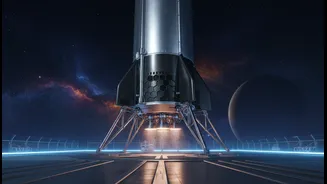
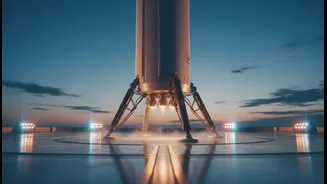
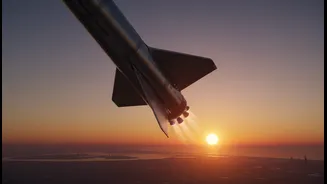
rocket and attempt to recover the first-stage booster. This marks India's first private-sector effort at orbital-class rocket reusability, a technology that has been pioneered globally by companies like SpaceX. CEO Srinath Ravichandran confirmed plans to attempt a vertical landing of the booster on a sea-based barge, a complex manoeuvre that underscores the company's confidence and ambition. This is a significant step beyond their initial test, which was a controlled, sub-orbital flight designed to validate their core technologies.
Why Reusability is a Game-Changer
For decades, rockets were single-use machines. The most expensive parts, the powerful engines and complex booster stages, would be discarded after a single flight, burning up in the atmosphere or crashing into the ocean. This made space access incredibly expensive. Reusability, as demonstrated by SpaceX's Falcon 9, changes the economic equation entirely. By recovering and refurbishing boosters, the cost per launch plummets. This allows for more frequent launches, opening up space for smaller companies and a wider range of applications. Agnikul believes mastering this technology could cut launch costs by as much as 80%. For Ravichandran, it's about shifting the philosophy from one-off achievements to a sustainable, high-frequency launch business.
The Technology Behind the Ambition
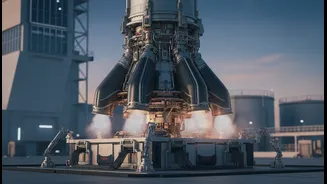
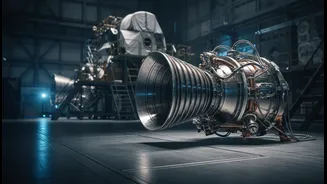
At the heart of Agnikul's innovation is its Agnilet engine, the world's first single-piece, 3D-printed rocket engine. This semi-cryogenic engine, powered by liquid oxygen and kerosene, was successfully flight-tested on the SOrTeD mission. Using 3D printing drastically simplifies manufacturing, allowing for rapid production and iteration. The upcoming Agnibaan orbital rocket will use a cluster of seven Agnilet engines in its first stage. The reusability attempt in Mission-02 will be a test bed for the complex guidance, navigation, and control systems required to steer the booster back through the atmosphere and execute a soft landing. To help navigate this complexity, Agnikul has even brought former ISRO Chairman S. Somanath onto its board as an observer, tapping into decades of top-tier rocketry experience.
The Long Road from Test to Reality
While the ambition is clear, the path to routine reusability is fraught with immense technical challenges. A rocket booster returning from the edge of space must withstand extreme temperatures and aerodynamic forces during re-entry. The engines must be robust enough to perform multiple firings, and the precision landing systems have to work flawlessly. Even global giants have faced setbacks on this journey. Agnikul's Mission-02 is a crucial first attempt, and the company is treating it as a learning opportunity. The data gathered from the recovery attempt—whether it succeeds or fails—will be invaluable for refining their design and operations for future flights. It's a critical step in a long process of testing and iteration.
Driving India's 'NewSpace' Future
Agnikul's venture into reusability is happening at a pivotal moment for India's space sector. Since opening to private investment in 2020, the country has seen the rise of more than 400 space startups. Companies like Skyroot Aerospace, which recently launched India's first privately developed orbital rocket, and Agnikul are leading this charge. These efforts are transforming India from a nation known for its cost-effective government-led missions into a potential hub for commercial space services. New Delhi projects that India's space economy could grow from around $8.4 billion today to $44 billion by 2033. By pursuing reusable technology, Agnikul is not just building a business; it's helping to build the foundation for India to compete on the global stage in the rapidly growing commercial space market.