







The Illusion of the Top Spot
We're conditioned to believe that the first result on a search engine is the most authoritative and relevant. This inherent trust is something we rarely question. Studies have shown that users are strongly biased towards higher-ranking links, often assuming
they are the most credible options. Cybercriminals are acutely aware of this cognitive shortcut and exploit it masterfully. They create convincing, but completely fake, websites that mimic official government portals for services like e-visas, tax filing, or job applications. These fraudulent sites are designed to do one thing: steal your personal information, financial details, or hard-earned money. The danger lies in their sophistication; they often feature stolen government logos, functioning calculators, and a professional design that makes them nearly indistinguishable from the real thing.
Gaming the System: How Fakes Rank High
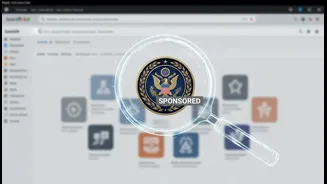
You might wonder how a fraudulent site can outrank an official one. There are two primary methods: paid advertisements and manipulative search engine optimization (SEO). The most direct way to the top is by paying for it. Scammers often buy ads that appear above the organic search results, clearly labeled but easily overlooked by users in a hurry. The second method, known as SEO poisoning, involves manipulating search algorithms to boost a malicious website's ranking organically. Attackers achieve this by stuffing their fake sites with popular keywords, building networks of low-quality sites that link back to their portal (known as link farms), and even hijacking legitimate but insecure websites to redirect users to their scams. A search engine's algorithm sees this activity and can mistakenly interpret it as a sign of popularity and relevance, pushing the fraudulent site up the rankings.
Your First Line of Defence: The URL
The single most reliable way to verify an official Indian government website is to check the domain name in your browser's address bar. Genuine central government portals in India will almost always end in `.gov.in` or `.nic.in`. The National Informatics Centre (NIC) is the government body responsible for designing and hosting official websites. Scammers, on the other hand, will register lookalike domains using common commercial extensions like `.com`, `.org`, `.in`, or `.net`. They often create subtle misspellings or add hyphens (e.g., `passport-india.com` instead of the official version). Be wary of any website asking for sensitive information that does not have the `.gov.in` or `.nic.in` suffix. While some state government portals may have slightly different structures, the `.gov.in` is the gold standard for federal services.
Beyond the Domain: Other Red Flags
While the domain is a crucial checkpoint, other signs can reveal a fake portal. Don't be fooled by a padlock icon in the address bar. While this indicates the connection is encrypted, scammers can easily obtain these SSL certificates for their fraudulent domains. It signifies a secure connection, not a trustworthy site. Look for poor grammar, spelling mistakes, or badly designed logos. While official sites are not always perfect, shoddy design can be a warning sign. Another major red flag is the payment method. Government portals typically use secure, integrated payment gateways. If a website asks for payment via direct bank transfer, QR codes, or mobile wallet apps, treat it with extreme suspicion. Finally, be cautious of links shared on social media or messaging apps like WhatsApp, as these are common channels for spreading scams.
Building a Safer Search Habit
To protect yourself, it’s essential to cultivate a habit of digital vigilance. Instead of searching for a service every time you need it, find the official portal once and bookmark it for future use. For a definitive directory of all official Indian government websites, use the National Portal of India (india.gov.in). This portal is a single-point source for accessing services and information from all levels of government, from central to district. If you ever suspect you have encountered a fraudulent website, you can report it to the National Cyber Crime Reporting Portal (cybercrime.gov.in) to help authorities take action. Developing these simple habits significantly reduces your risk of falling victim to online fraud and ensures you are interacting with legitimate government services.