





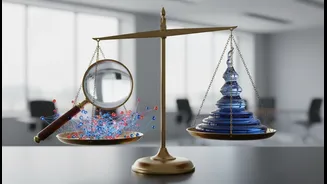


Why Human-First Analysis Still Rules
Before you ever open an AI chat window, the most crucial work happens inside your own head. The process of manually mapping an issue—whether it's a new business strategy, a project plan, or a complex problem—forces you to build an intimate understanding
of the terrain. This initial, human-led effort is irreplaceable. When you create a mind map, a flowchart, or even a simple outline, you are not just organizing information; you are building context, wrestling with priorities, and embedding the details into your own thinking. This cognitive effort is what separates true insight from superficial summary. AI excels at processing data, but it lacks human judgment, intuition, and the creative spark needed for complex decision-making. By starting the process yourself, you establish a strong foundation grounded in your own expertise and strategic goals, ensuring the entire exercise remains anchored to your purpose.
The Art of Mapping Your Issue
So what does it mean to “map” an issue? It’s about creating a visual and structural representation of a problem or plan. This can take many forms, and the best choice depends on your objective. A SWOT analysis (Strengths, Weaknesses, Opportunities, Threats) is a classic framework for strategic positioning. An issue tree breaks a large, complex problem down into smaller, manageable sub-problems, helping to identify root causes. For understanding customer experiences, a customer journey map can reveal pain points and opportunities you might otherwise miss. These frameworks aren’t just for consultants; they are powerful tools for any professional looking to bring structure to their thoughts. The goal is to get everything out of your head and onto a page, creating a comprehensive snapshot of your current understanding, including all known variables, stakeholders, and processes.
Bringing in Your AI Co-Pilot
Once your manual map is complete, it's time to bring in your AI partner. Its role is not to create the strategy but to stress-test it. An AI model can process your map and identify patterns, missing links, and potential blind spots that you, as a human, are naturally inclined to miss due to cognitive biases. While you were focused on building the structure, the AI can act as a dedicated sceptic, a 'red team' in a box. It doesn’t have your emotional attachment to an idea, and it can cross-reference your plan against vast datasets of information that would be impossible for a person to review manually. This is where the synergy happens: your deep contextual understanding meets the AI's brute-force pattern recognition.
How to Prompt AI for Gap Analysis
The quality of your AI's feedback depends entirely on the quality of your prompt. This is a business capability, not a technical trick. Don't just ask, “What’s missing?” Instead, provide your full analysis as context and ask specific, targeted questions. Feed the AI your completed issue map, SWOT analysis, or project plan. Then, use prompts designed to challenge it. For instance: “You are a risk management expert. Based on this project plan, what are the top three potential failure points I have overlooked?” “Review this market analysis. What counterarguments or alternative interpretations exist that are not represented here?” * “Given these customer segments and value propositions, which stakeholder group have I likely forgotten to consider?” By assigning the AI a role and asking it to look for specific types of gaps, you transform it from a generic chatbot into a specialized analytical tool.
Closing the Loop: Human Judgment Is Final
The AI's output is not the final answer; it's a new set of data points for you to consider. The final and most important step is to apply your human judgment to the gaps the AI has identified. Some suggestions will be irrelevant, misguided, or based on a misinterpretation. Others, however, will be the invaluable nuggets of insight that make this entire process worthwhile. It is your job to sort the signal from the noise, integrate the valid points back into your original map, and refine your strategy accordingly. This human-AI collaboration ensures that you get the best of both worlds: the speed and analytical power of the machine, guided and validated by the wisdom and context of human experience. This balanced approach doesn't just produce better strategies; it fosters a more dynamic and resilient way of thinking.