

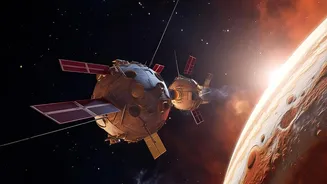
Meet PRIMA: NASA's New Cosmic Explorer
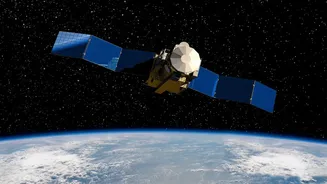
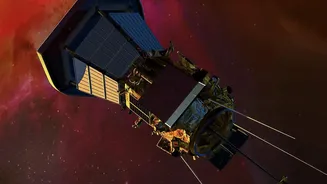
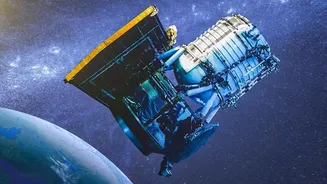
NASA has officially begun preliminary design and technology development for its next major space observatory, the Probe far-Infrared Mission for Astrophysics, or PRIMA. This mission is the first of a new class of projects called Probe Explorers, designed
to bridge the gap between smaller missions and multibillion-dollar flagships like the James Webb Space Telescope (JWST). With a projected cost cap of $1.2 billion, PRIMA aims to deliver high-priority science without the massive budget of its predecessors. Recent announcements confirm the project is moving into a new development phase, advancing the design toward a targeted launch in 2033. The mission will be managed by NASA's Jet Propulsion Laboratory, with collaboration from international partners including space agencies in Canada, France, Germany, Japan, and the United Kingdom.
Seeing the Universe in a New Light
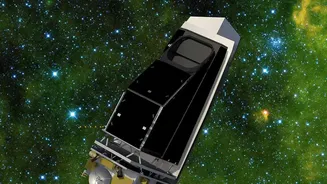
PRIMA is designed to see the universe in a way that other telescopes cannot. It will be equipped with a 1.8-meter (5.9-foot) telescope that is cryogenically cooled, allowing it to observe far-infrared light. This part of the electromagnetic spectrum is invisible to human eyes but holds the key to understanding the "cool universe." Far-infrared radiation can pass through the dense clouds of cosmic dust and gas that obscure visible light, offering a clearer view of stellar nurseries, the centers of galaxies, and regions where new planets are forming. While JWST observes in the near- and mid-infrared, PRIMA will fill a crucial observational gap, extending our vision to the longer far-infrared wavelengths and bridging the divide between existing space telescopes and ground-based radio observatories. This capability will allow scientists to study phenomena that have remained hidden, from the formation of solar systems to the growth of supermassive black holes.
Solving Cosmic Mysteries
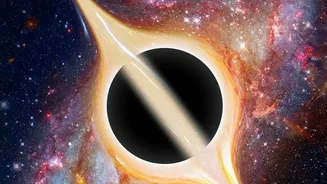
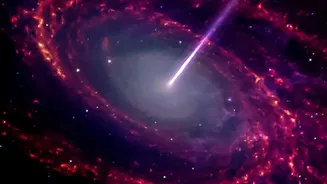
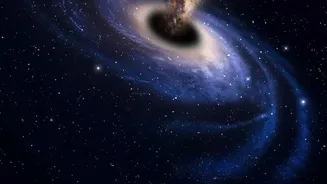
The scientific goals for PRIMA are ambitious and wide-ranging. A key objective is to study the entire process of star and planet formation, from the initial collapse of gas clouds to the emergence of planetary systems. In this wavelength, astronomers can probe the "snowlines" in developing solar systems, where molecules like water freeze, a crucial step in understanding how water arrived on Earth. The telescope will also investigate how galaxies and their central black holes grow and evolve over cosmic time. By conducting deep surveys of the sky, PRIMA will help trace the history of dust and heavy elements, painting a more complete picture of how the universe came to look the way it does today. Closer to home, the mission could even examine distant objects in our own solar system's Kuiper Belt, detecting bodies that are too small and cold to be seen by other observatories.
The Path to Launch
While the 2033 launch target is on the calendar, the PRIMA mission must first clear several critical hurdles. The project has entered what NASA calls Phase B, which focuses on finalizing the preliminary design and maturing the necessary technology. This phase is a crucial period where the mission's architecture, instrument plans, and budget are refined. Following this, the mission will face a formal confirmation review. This is a standard but rigorous assessment where NASA will evaluate the project's technical progress, schedule, and cost performance to decide if it is ready to move into Phase C—the final design and fabrication stage. Successfully passing this review is the green light for building the spacecraft and its instruments, keeping it on track for its journey to space in the next decade.