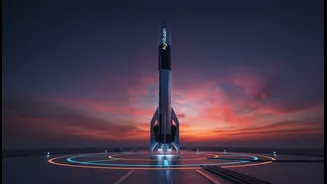





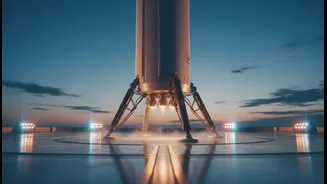



In the high-stakes theatre of space exploration, launches are just the beginning. Chennai-based startup Agnikul Cosmos is now preparing for its next act, Mission-02, which aims for a goal far more complex than just reaching orbit.
A Mission with Two Goals
Agnikul has announced
that its second major mission will be India's first private attempt to recover an orbital-class rocket booster. While the primary objective is to deliver customer satellites into orbit, the secondary goal is to bring the rocket's first stage back for a controlled landing. This ambitious plan follows the company's successful sub-orbital test flight, Agnibaan SOrTeD, in May 2024, which provided the confidence and crucial data to pursue reusability much sooner than initially planned. CEO Srinath Ravichandran has stated the company will give the recovery a 'full shot', signalling a bold step forward.
The Reusability Revolution
For decades, rockets were an expensive, single-use technology. Each launch meant the entire multimillion-dollar vehicle was discarded. Reusable rockets change this economic equation entirely. Much like a commercial airplane, a rocket that can be flown, recovered, refurbished, and flown again drastically cuts the cost of reaching space. Experts estimate that successful reusability could reduce launch costs by as much as 80%. This doesn't just make existing space operations cheaper; it opens the door for new businesses and scientific missions that were previously unaffordable, from large satellite constellations to in-space manufacturing.
How Agnikul Plans to Do It
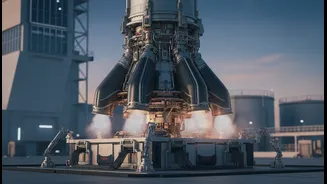
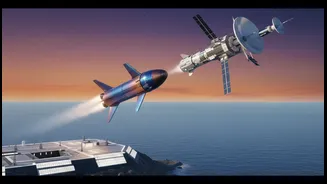
Agnikul's approach involves a powered vertical landing of the rocket's first stage on a barge in the Bay of Bengal, a technique pioneered by SpaceX. To achieve this, the booster will be equipped with its own landing legs, grid fins for steering during atmospheric reentry, and independent navigation systems. But Agnikul's ambition doesn't end there. The company also plans to repurpose the rocket's upper stage, which traditionally becomes space debris after deploying its payload. The idea is to turn this spent stage into an orbiting platform that can host experiments or other technologies, creating an entirely new revenue stream.
A New Race in India's Space Sector
Agnikul is not alone in its pursuit. The race for reusability is heating up within India's burgeoning private space industry. Hyderabad-based Skyroot Aerospace, which recently became India's first private company to launch a rocket to orbit, is also working on a fully reusable launch vehicle. These private efforts are running parallel to the Indian Space Research Organisation's (ISRO) own reusable launcher programs, including the winged 'Pushpak' spaceplane and the heavy-lift Next Generation Launch Vehicle (NGLV). This healthy competition between the private sector and the national agency is accelerating innovation and could position India as a major global player in the launch market. The recent appointment of former ISRO chief S. Somanath to Agnikul's board as an observer further underscores the synergy between the old guard and the new.
The Long Road Ahead
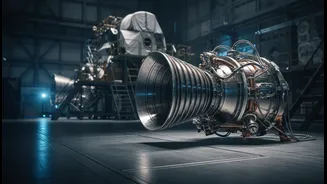
Despite the excitement, achieving reusability is one of the hardest challenges in engineering. It requires mastering controlled descent from hypersonic speeds, protecting the vehicle from the intense heat of reentry, and executing a pinpoint landing on a moving target. These are complex technical hurdles that have been mastered by only a handful of companies and nations worldwide. While Agnikul's first mission will focus on testing the controlled descent and recovery profile, the path to routine reuse will involve years of testing, refinement, and significant investment. However, the confidence gained from their unique 3D-printed semi-cryogenic engine and agile development process puts them in a strong position.