

The Arctic's Warming Puzzle
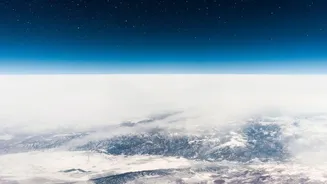
The Arctic is the epicentre of global climate change, warming about three to four times faster than the global average. This phenomenon, known as Arctic amplification, has profound consequences, from melting glaciers and permafrost to disrupting global weather
patterns. At the heart of this rapid change lies a complex and often paradoxical element: clouds. Clouds can act as a warming blanket, trapping heat that radiates from the surface, or as a cooling shield, reflecting sunlight back into space. Which role they play depends on their composition, thickness, and altitude, making them one of the biggest uncertainties in climate models. To solve this puzzle, scientists are looking at something incredibly small but critically important: the tiny aerosol particles around which cloud droplets form.
Cloud Seeds from a Melting World
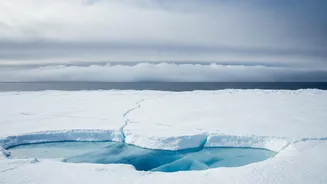
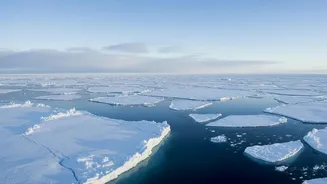
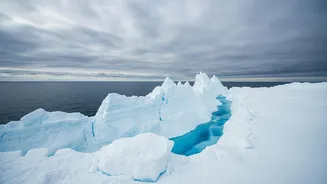
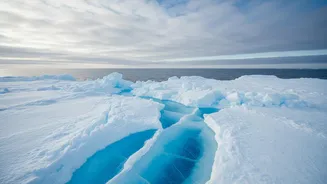
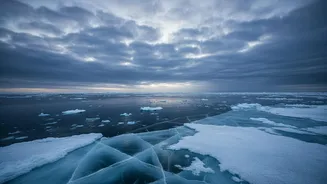
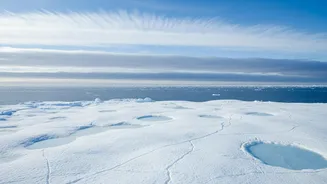
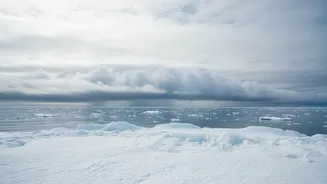
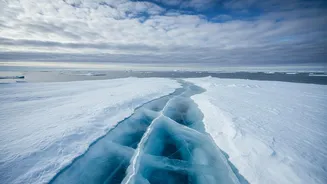
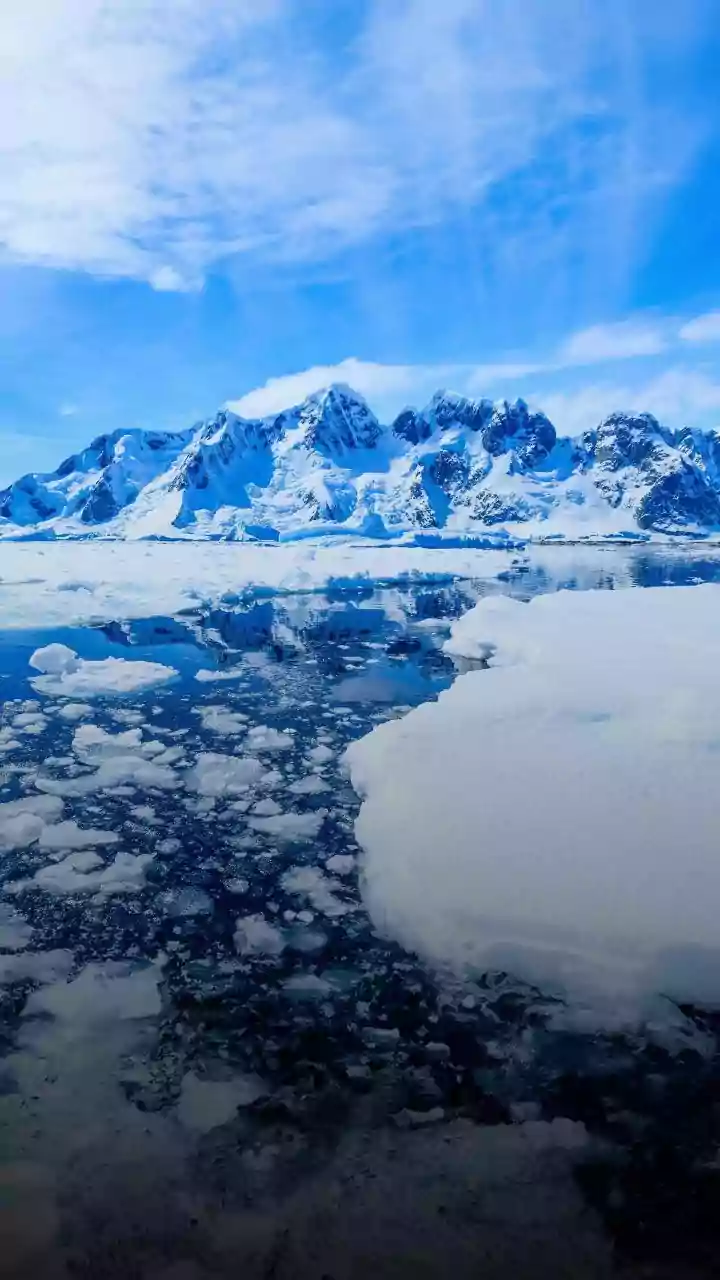
For a cloud to form, water vapour needs a solid surface to condense upon. In the atmosphere, these surfaces are tiny suspended particles known as aerosols. While industrial pollution contributes aerosols in many parts of the world, the Arctic atmosphere is comparatively pristine. This is where a recent study published in Nature Geoscience provides a breakthrough. An international team of researchers has found that the boundary where sea ice meets the open ocean—the marginal ice zone—is a surprisingly potent source of these cloud-seeding particles. As the warming atmosphere melts the ice, it exposes a highly productive zone of marine algae and other life. This marine life, combined with the sea ice and ocean water, releases a cocktail of chemicals into the air, including iodine and sulphur compounds.
A Burst of New Particles
The study, led by the University of Birmingham, provided the first real-world evidence of a process previously only seen in laboratory experiments at CERN. Under sunlight, the iodine and sulphur compounds released at the ice edge undergo a rapid chemical transformation, creating a burst of brand-new aerosol particles. The effect is dramatic. Researchers on an expedition around Greenland and the Davis Strait observed that on sunny days, the number of particles capable of forming cloud droplets could increase fifty-fold in a single day. In one event, the concentration of these particles skyrocketed from around 50 to 1,500 per cubic centimetre. This process of 'new particle formation' was observed on over 80% of sunny days during the study, showing it is a common and powerful phenomenon.
A Complicated Climate Feedback Loop
This discovery reveals a new and important climate feedback loop. A warming atmosphere melts sea ice. The melting ice exposes the marginal ice zone, which then releases chemicals that, under sunlight, create a huge number of new particles. These particles seed more clouds. The critical question, which scientists are now working to incorporate into climate models, is what kind of net effect these clouds will have. Do they primarily reflect sunlight, providing a local cooling effect that might slow down melting? Or do they trap more heat, especially during the long polar night, accelerating the warming cycle? The answer is not yet clear, and this finding adds another layer of complexity to predicting the Arctic's future. What is certain is that this natural process, not currently accounted for in climate projections, is reshaping the Arctic atmosphere.
Why This Matters for India
What happens in the Arctic doesn't stay in the Arctic. The region acts as the planet's refrigerator, and its rapid warming has ripple effects across the globe. Changes in the temperature difference between the poles and the tropics can influence the jet stream and other major atmospheric circulation patterns. These disruptions can lead to more extreme weather events far to the south, potentially affecting the stability and intensity of crucial climate systems like the Indian monsoon. Understanding every piece of the Arctic puzzle, down to the smallest aerosol particle, is therefore essential for building more accurate climate models. These improved models are vital for predicting future climate scenarios and preparing for the widespread impacts of a changing planet.