




Why Monsoon Watering is a Balancing Act
During summer, your plants are thirsty, and the soil dries out quickly. Daily watering is often a necessity. The monsoon flips this script entirely. Constant rain, high humidity, and overcast skies mean the soil in your pots stays wet for much longer.
The very water that brings life can also suffocate it. When soil is constantly waterlogged, roots are deprived of oxygen, which they need to function. This creates a perfect environment for root rot, a fungal disease that can quickly kill a plant. Continuing a summer watering schedule is one of the most common mistakes balcony gardeners make, leading to yellowing leaves, stunted growth, and unhealthy plants.
The Finger Test: Your Most Reliable Tool
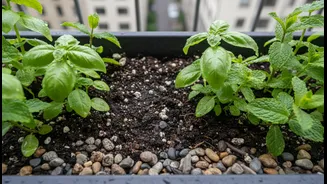
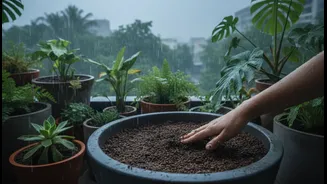
Forget watering on a fixed schedule. Your finger is the best and cheapest moisture meter you can own. Before you even think about picking up the watering can, push your index finger about two inches into the soil. If the soil feels cool and moist at that depth, your plant does not need water. If it feels dry and crumbly, it's time for a drink. This simple, five-second check should be done for every single pot, as conditions can vary dramatically from one to the next. Cold soil can sometimes feel damp even when it's dry, so press a little between your fingers. Moist soil will stick together, while dry soil will fall apart.
Not All Pots and Soils Are Created Equal
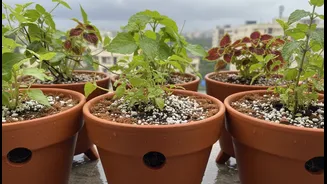
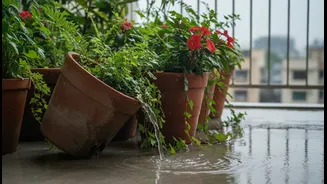
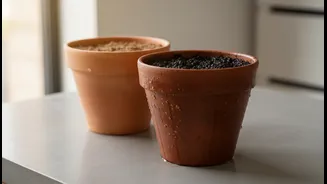
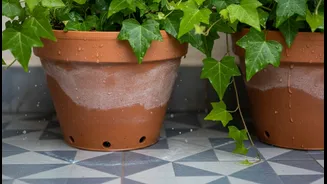
The type of pot you use has a huge impact on how quickly the soil dries. Terracotta or clay pots are porous, meaning they breathe and allow moisture to evaporate through their walls. Plants in these pots will need water more frequently. Glazed ceramic and plastic pots, on the other hand, are non-porous and retain moisture for much longer. Likewise, the soil itself is a major factor. Heavy, dense garden soil holds water and can become a solid, airless block in the monsoon. A lightweight, well-draining potting mix, often containing coco peat, compost, and perlite, is essential for container gardening. This allows excess water to escape while keeping the soil aerated.
Location Matters, Even on a Small Balcony
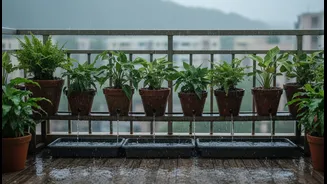
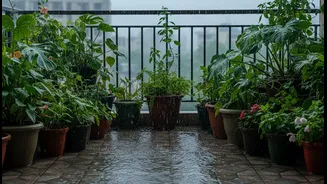
A single balcony can have several microclimates. A pot placed in a corner exposed to driving rain will be far wetter than one tucked against a wall under an overhang. Plants in windy spots will dry out faster than those in sheltered areas. Even the colour of the pot can have an effect. This is why a one-size-fits-all approach fails. Take a moment to observe your balcony. See which pots get hit by rain directly and which stay relatively dry. You may need to move more sensitive plants, like succulents or cacti, to a covered spot for the season to prevent them from rotting. Meanwhile, rain-loving plants like ferns and colocasia will be perfectly happy in the open.
Spotting the Signs of Trouble
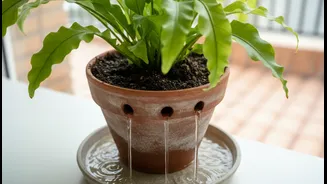
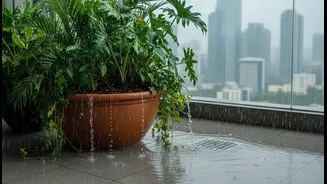
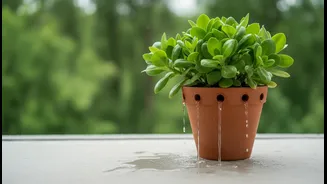
Ironically, a plant suffering from overwatering often looks wilted, which can trick you into watering it even more. This happens because the damaged, suffocating roots can no longer absorb water efficiently. Other key signs of overwatering include yellowing leaves (especially lower ones), soft or mushy stems, and a musty or foul smell from the soil. You might also see mold or fungal growth on the soil surface. It’s also crucial to check that the drainage holes at the bottom of your pots are not blocked. If water can't escape, even the best watering practices won't save your plant. Also, make sure to empty any water collection saucers, as leaving pots sitting in standing water is a leading cause of root rot.