



The Milk and Sugar Question
For many, coffee without milk and sugar is unthinkable. In India, the tradition of filter kaapi, a strong decoction mixed with hot milk and sugar, is a cultural cornerstone, especially in the South. This practice isn't just about taste; it has historical
roots. When coffee first spread across Europe, the beans were often low-quality and roasted very dark, resulting in a bitter, intense flavour. Milk and sugar were added to make it more palatable. The Dutch are credited with first adding milk to coffee around 1660, inspired by Chinese tea-drinking customs, and the trend quickly caught on in European coffee houses. Today, from a classic cappuccino to a comforting latte, milky coffee is a global phenomenon. However, there is a growing movement that shuns these additions entirely.
The Rise of the Purist
The 'third wave' of coffee has shifted focus from coffee as a commodity to an artisanal product, much like fine wine. This movement champions high-quality, single-origin beans with unique flavour profiles. Proponents argue that adding milk or sugar masks the subtle, complex notes—like fruit, floral, or citrus hints—that roasters and farmers worked hard to cultivate. The goal is to taste the bean's origin, or 'terroir', in its purest form. This philosophy has popularised manual brewing methods like pour-overs, which produce a cleaner, more delicate cup where these nuanced flavours can shine. For these drinkers, black coffee isn't about bitterness; it's about clarity and appreciating the coffee's inherent character.
How Brewing Shapes Your Cup
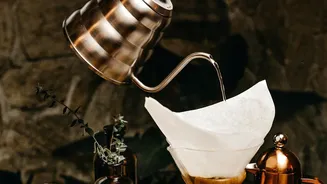
The brewing method itself is a fundamental part of the divide, as it dictates much of the final taste before milk or sugar even enter the picture. An immersion method like the French press, where grounds steep in water, results in a heavy-bodied, robust cup with more oils and fine particles. In contrast, a traditional South Indian filter uses percolation, where hot water drips slowly through a bed of fine coffee grounds, often blended with chicory, to produce a strong, concentrated decoction. Espresso machines use pressure to force hot water through a tightly packed puck of coffee, creating a concentrated shot with a rich crema. Meanwhile, pour-over methods use a paper filter, which absorbs oils and sediment, leading to a much cleaner, brighter cup. Each method extracts flavours differently, setting the stage for how one might choose to drink it.
It Starts with the Bean
Ultimately, the coffee divide begins at the source: the bean itself. The two most dominant species are Arabica and Robusta. Robusta beans, commonly used in instant coffee and traditional espresso blends, have a bolder, stronger, and often more bitter taste with higher caffeine content. Their 'earthy' or 'rubbery' notes made them a prime candidate for milk and sugar. Arabica beans, on the other hand, are prized in the specialty coffee world for their complex aromatic and flavour profiles, which can range from fruity and sweet to floral and tangy. They have higher acidity and nearly twice the sugar content of Robusta beans. The third wave movement's preference for lighter roasts of high-quality Arabica beans is a direct effort to preserve and showcase these delicate flavours, which are easily overpowered.