
A Cosmic Photobomb
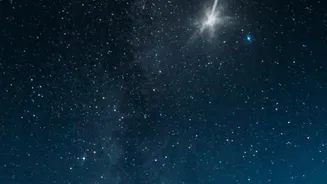
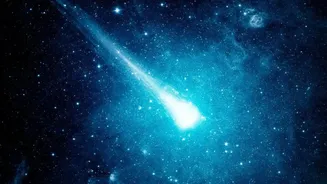
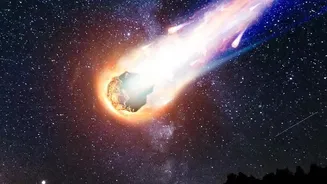
The image in question, featured as NASA's Astronomy Picture of the Day for August 3, 2026, shows a brilliant meteor streaking through a long-exposure photograph of the Lacerta Nebula. Captured by an astrophotographer, the image wasn't intended to be about
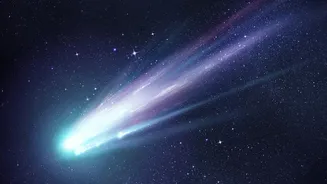
the meteor at all, but the intruder stole the show. As the small space rock, likely no bigger than a pebble, entered Earth's atmosphere, it heated up and vaporised, leaving behind a trail of superheated gas and dust that tells a fascinating chemical story. This event comes as skywatchers prepare for the peak of the annual Perseid meteor shower, one of the most active showers of the year.
More Than Just a Flash of Light
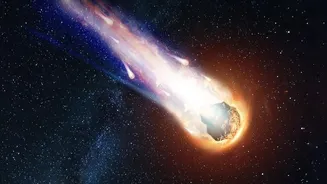
When a meteoroid hits our atmosphere at incredible speeds, it's not just friction that creates the light we see. The intense heat causes the rock itself to disintegrate, a process called ablation. The different elements and minerals within the rock vaporise, each glowing with a characteristic colour. Think of it as a cosmic firework display where each colour reveals a different ingredient. The glow comes from both the meteoroid's own material and the atmospheric gases it excites on its way down. This is the science of spectroscopy in action, where light is broken down into its constituent parts to reveal a chemical fingerprint.
A Meteor's Mineral Fingerprint
So, what are these vaporising minerals? The colours in a meteor's trail are distinct signatures. A bright yellow-orange flash points to the presence of sodium, which is surprisingly abundant in many meteoroids. A green glow is often caused by vaporising magnesium, and sometimes iron. Reddish hues can come from calcium or silicon, while nitrogen and oxygen in our own atmosphere can also contribute to the colourful display, especially at different altitudes. By analysing the light spectrum from this single flash, scientists can deduce the elemental recipe of the original space rock. Some studies have even found that sodium content in meteoroids of cometary origin is higher than what's found in meteorites that reach the ground, suggesting much of it burns off high in the atmosphere.
From Comet Dust to Shooting Stars
Most meteor showers, including the upcoming Perseids, are the result of Earth passing through the debris trail left behind by a comet. The Perseids are associated with Comet Swift-Tuttle. These tiny particles, often no larger than grains of sand, are remnants of the early solar system. They are essentially frozen time capsules containing the raw materials that built the planets. When they vaporise in our atmosphere, we get a direct look at the composition of these ancient comets. The minerals revealed—like sodium, magnesium, and iron—are the very same building blocks that formed Earth and the other rocky bodies in our cosmic neighbourhood.
Why This Image Matters
While millions of meteors enter our atmosphere daily, capturing one in such detail, and being able to analyse its brief life, is invaluable. Each observation adds a piece to the puzzle of our solar system's history. This particular image serves as a perfect public illustration of a complex scientific process. It visually connects the dots between a beautiful 'shooting star' and the science of spectroscopy and planetary formation. It reminds us that even the smallest, most fleeting events in the sky can carry profound information about the origins of our world. As technology improves, scientists are getting better at reading these cosmic smoke signals, turning every bright streak into a lesson in chemistry and history.