








Artificial intelligence is everywhere, but the revolution runs on something much bigger: a physical infrastructure build-out of unprecedented scale. The world’s biggest tech companies are spending trillions, and it’s time to understand why.
An Unprecedented Spending Spree
The numbers
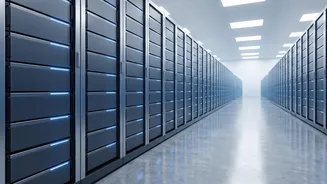
behind the current artificial intelligence boom are staggering. According to recent forecasts from Gartner, worldwide AI spending is projected to hit $2.7 trillion in 2026, a nearly 50% increase from the previous year. This isn't just a minor budget increase; it represents what one analyst has called "the largest infrastructure project humanity has ever undertaken." Driving this surge is a desperate race to build the massive data centres required to train and run increasingly complex AI models. Hyperscalers—the giants of cloud computing like Amazon Web Services (AWS), Microsoft Azure, and Google Cloud—are at the epicentre of this spending. Goldman Sachs projects that the top five hyperscalers will spend around $800 billion on capital expenditures in 2026 alone, with that figure expected to climb to $1.2 trillion in 2027. This historic investment cycle is transforming these companies, once primarily focused on software and services, into some of the world's biggest infrastructure developers.
The Insatiable Thirst for Compute Power
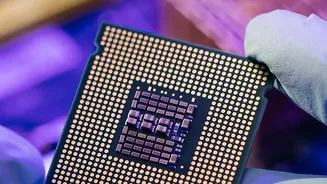
At the heart of this spending is the insatiable demand for "compute capacity." Modern generative AI, which powers everything from advanced chatbots to image generators, requires a colossal amount of processing power. The work is primarily done by specialised hardware, particularly Graphics Processing Units (GPUs) manufactured by companies like Nvidia. Training a new large language model can require thousands of these chips running simultaneously for weeks or months. But the demand doesn't stop there. An even bigger driver of long-term compute usage is "inference"—the process of an already trained model generating an answer to a user's query. Every time you ask an AI a question, it requires a slice of a data centre's processing power. As hundreds of millions of people begin using AI tools daily, the cumulative demand for inference is exploding, forcing hyperscalers to build out capacity at a historic rate.
Who Benefits From the Boom?
This massive capital flow creates a cascading effect across the tech ecosystem. The most obvious beneficiary is Nvidia, whose advanced GPUs like the Blackwell and Vera Rubin series have become the gold standard for AI. The company's data centre revenue has skyrocketed, with a recent report showing a 117% year-over-year increase, reflecting immense demand from hyperscalers. In fact, data centre sales now account for the vast majority of Nvidia's business, tying its fortunes directly to the capital expenditure plans of a handful of tech giants. But the spending extends beyond just chips. It fuels demand for networking equipment, memory, cooling systems, and the construction of the physical data centres themselves, creating a wide-ranging industrial boom.
What It Means for India
This global infrastructure race has significant implications for India, which has become a key battleground for hyperscalers. Amazon, Microsoft, and Google have collectively committed over $67.5 billion to expand their AI and cloud infrastructure in the country. Amazon recently added $13 billion to its India investment, bringing its total commitment to $48 billion through 2030 to expand data centre capacity in Mumbai and Hyderabad. Microsoft has separately pledged $17.5 billion by 2029. This influx of capital is driven by India's rapidly growing market for AI services. Indian enterprises are adopting AI at a faster rate than the global average, with around 40% reporting significant or full usage compared to 28% worldwide. This on-the-ground adoption, from product development to marketing, is creating massive demand for local data centre capacity to ensure low latency and comply with data residency rules. The investments are aimed at giving Indian startups, enterprises, and government agencies access to the same powerful AI tools and services available globally, directly from data centres on Indian soil.