








The Promise of a Digital Assistant
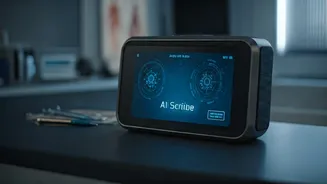
At its core, an AI scribe is a sophisticated software tool that listens to conversations and automatically generates structured notes. Using ambient voice technology, it captures the natural dialogue between, for example, a doctor and patient or a lawyer
and client. The system then uses artificial intelligence, including large language models, to transcribe the conversation, identify key details, and format them into a professional document like a SOAP note or a case summary, excluding irrelevant small talk. The goal is to slash the administrative burden that bogs down highly skilled professionals, freeing them up for the work that truly matters.
A Revolution in Productivity
The primary benefit of AI scribes is a dramatic boost in efficiency. Professionals in fields like healthcare report spending a significant portion of their day on administrative tasks and updating records. Studies suggest that AI scribes can save clinicians hours each day by automating this documentation process. This not only allows them to see more patients or clients but also enhances the quality of their interactions. With the AI handling the note-taking, professionals can maintain eye contact and engage more deeply, leading to better patient experiences and potentially more accurate diagnoses. This reduction in administrative load is also seen as a crucial tool in combating professional burnout.
The Hidden Risks of Automation
Despite the upsides, the rapid adoption of AI scribes comes with significant risks. A primary concern is accuracy. AI models can misinterpret complex medical terminology, struggle with accents, or even "hallucinate"—inventing details that were never said. If not caught by a human reviewer, such errors could lead to incorrect diagnoses or treatment plans. Then there's the critical issue of data privacy. These tools handle incredibly sensitive information. Questions abound regarding where this data is stored, who has access to it, and how it's protected from breaches. Using patient data to train AI models also raises complex ethical questions about consent that go beyond a simple agreement to be recorded.
Who Is Watching the Watchers?
Perhaps the most significant challenge is the near-total lack of specific regulation and oversight. In many jurisdictions, AI scribes are classified as administrative tools rather than medical devices, allowing them to bypass the rigorous validation and safety standards applied to other health technologies. This creates a regulatory gap where vendors are not always transparent about their systems' error rates or potential biases. When an error does occur, it creates a murky legal situation. Who is liable? The clinician who is ultimately responsible for the record, the healthcare institution, or the tech company that built the AI? This lack of clarity leaves both professionals and their clients or patients in a vulnerable position.
The Human Element at Stake
Beyond the technical and legal issues, there are concerns about the long-term impact on professional skills and the human relationship at the heart of these services. Some worry that over-reliance on automated note-taking could erode clinicians' own documentation and critical reasoning skills over time. Furthermore, the constant presence of a recording device, even an automated one, can change the dynamic of a conversation. Patients may be less forthcoming if they know every word is being stored and analysed. While the goal is to increase human interaction, the solution itself introduces a non-human element into some of life's most sensitive conversations, a trade-off that requires careful consideration.