







A Miss of Historic Proportions
When Elon Musk unveiled the Cybertruck, he projected annual production could hit 250,000 units. The reality has been a fraction of that. After selling just under 39,000 units in its first full year of 2024, sales plummeted by 48% in 2025 to around 20,000
vehicles. The numbers for 2026 look even more grim, with only about 7,100 registrations in the US through May. This steep drop has led to unflattering comparisons with the Ford Edsel, long considered the benchmark for a major automotive flop. The Edsel missed its first-year target by a wide margin, but the Cybertruck's miss, relative to its own ambitious target, is arguably greater.
What's Behind the Sales Slump?
Several factors are contributing to the Cybertruck's struggles. Its radical, polarizing design, while a conversation starter, appears to have limited its appeal to a niche audience rather than the broad pickup truck market. Production has also been a significant hurdle. The unique stainless-steel exoskeleton proved difficult to manufacture at scale, leading to delays and quality control issues. More recently, a dispute with a key supplier, Angstrom Automotive Group, threatened to halt the production line entirely after the supplier refused to release essential, custom-built tooling. This created a bottleneck for crucial parts that Tesla says would take months to replicate, jeopardizing the completion of thousands of vehicles.
An Analyst's Prescription: A New Variant
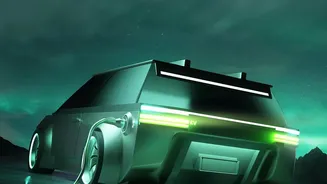
In light of these struggles, some analysts are suggesting a strategic shift. Garrett Nelson, an equity analyst at CFRA Research, floated the possibility of Tesla creating a different variant to try and boost sales. While Nelson expressed skepticism that such an effort would succeed, the idea points to a potential path forward. The suggestion isn't for a minor tweak, but a significant redesign or a new model entirely that addresses the core issues limiting the current truck's appeal. This could mean a smaller, more affordable, or more conventionally designed version that could compete more directly with other electric pickups and appeal to a wider base of consumers.
Could a Different Cybertruck Work?
The logic behind a new variant is straightforward. A smaller truck could be more appealing in international markets where tight roads make the current Cybertruck impractical. A lower price point would also be critical. Tesla has already attempted to stimulate demand by introducing a cheaper, dual-motor AWD trim for under $60,000 in early 2026. A hypothetical new model could take this further, aiming for the mass market that the Model 3 and Model Y successfully captured. However, this strategy is not without risks. Introducing a new variant could be seen as an admission that the original vision failed, potentially diluting the brand's audacious identity.
The Road Ahead for the Angular Truck
Tesla faces a difficult choice. Doubling down on the current Cybertruck risks further investment in a product with a seemingly limited market. The company has already tried cutting prices on its premium 'Cyberbeast' model and introducing more affordable trims to generate momentum. Yet, the fundamental challenges of its size and design remain. On the other hand, developing a new variant would require significant time and resources, diverting focus and capital from other ambitious projects like robotics and robotaxis. It would be a major strategic pivot for a company and a CEO known for sticking to their vision, no matter how unconventional.