





The Rise of 'Hushpitality'
Forget packed tourist traps and overflowing attractions. A new travel philosophy is taking hold, sometimes called 'hushpitality'—the pursuit of holidays centred on peace, nature, and a slower pace of life. According to Agoda's 2026 Travel Outlook report,
a staggering 67% of Indian travellers cite 'relaxation' as their main motivation for taking a trip. This desire to unwind is steering them away from traditional hotspots and towards destinations that offer space to breathe. The top reasons for choosing these secondary destinations are the promise of unique cultural experiences, lower costs, and, most importantly, fewer crowds. It's less about where you've been and more about how you felt while you were there: rested, restored, and reconnected.
Inward Wanderlust: India's Own Hidden Gems
This quest for quiet has ignited a powerful trend of 'inward wanderlust', with a renewed focus on domestic exploration. More than a third of Indian travellers plan to explore more within the country than internationally. The data shows a massive surge in accommodation searches for destinations that offer spiritual solace or natural beauty. The hill town of Pachmarhi in Madhya Pradesh saw an almost sevenfold year-on-year increase in searches, while Ujjain recorded a threefold rise and Puri's searches doubled. This trend underscores a desire for purpose-driven travel, with India leading all of Asia in travellers planning spiritual or religious journeys.
Himalayan Havens Calling
The Himalayas have become a major beneficiary of this shift. Agoda reports a dramatic spike in interest for mountain towns that offer a tranquil escape. Dharamshala, known for its serene Tibetan culture and forest trails, saw a 154% jump in accommodation searches. Rishikesh, a global hub for yoga and wellness, followed with a 65% increase, while the quieter mountain town of Uttarkashi also saw searches rise by 17%. These destinations are attracting visitors who want to trade the pace of city life for simpler experiences centred on time, space, and quiet reflection, confirming that the mountains are calling, and travellers are listening.
Spiritual Sanctuaries on the Rise
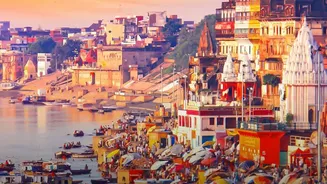
Spiritual travel is no longer a niche interest; it's a mainstream driver of tourism in India. The search data reveals huge interest in places of cultural and religious significance. Pushkar, especially during the vibrant Holi festival, recorded a 195% increase in searches. Similarly, searches for the Himalayan destination of Leh, a gateway to ancient monasteries and stark, beautiful landscapes, rose by 143%. Even established pilgrimage sites like Varanasi and Tirupati saw search growth of 44% and 29% respectively, proving that travellers are increasingly planning journeys that blend faith with exploration.
Asia's Uncrowded Alternatives
The preference for quieter spots extends to international travel as well. Indian travellers exploring Asia are looking beyond the usual gateway cities for more authentic experiences. In Japan, for example, secondary cities like Sendai and Takamatsu are seeing faster growth in interest than hubs like Tokyo. In Southeast Asia, the trend is reshaping beach holidays. Instead of only flocking to Bali or Phuket, travellers are exploring calmer alternatives. Destinations like Lombok in Indonesia, Phu Quoc and Da Nang in Vietnam, and the island of Ko Tao in Thailand are gaining popularity for their uncrowded beaches, local charm, and laid-back pace. Even in Sri Lanka, coastal towns like Trincomalee are emerging as peaceful getaways.