





A Promising Candidate for Life
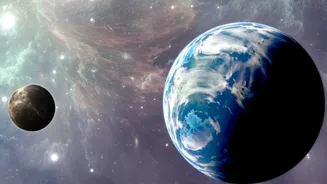
Located just 49 light-years away, LHS 1140 b has been a top target for astronomers since its discovery in 2017. It’s a 'super-Earth,' meaning it’s larger and more massive than our own planet — about 1.7 times the radius and 5.6 times the mass. Crucially,
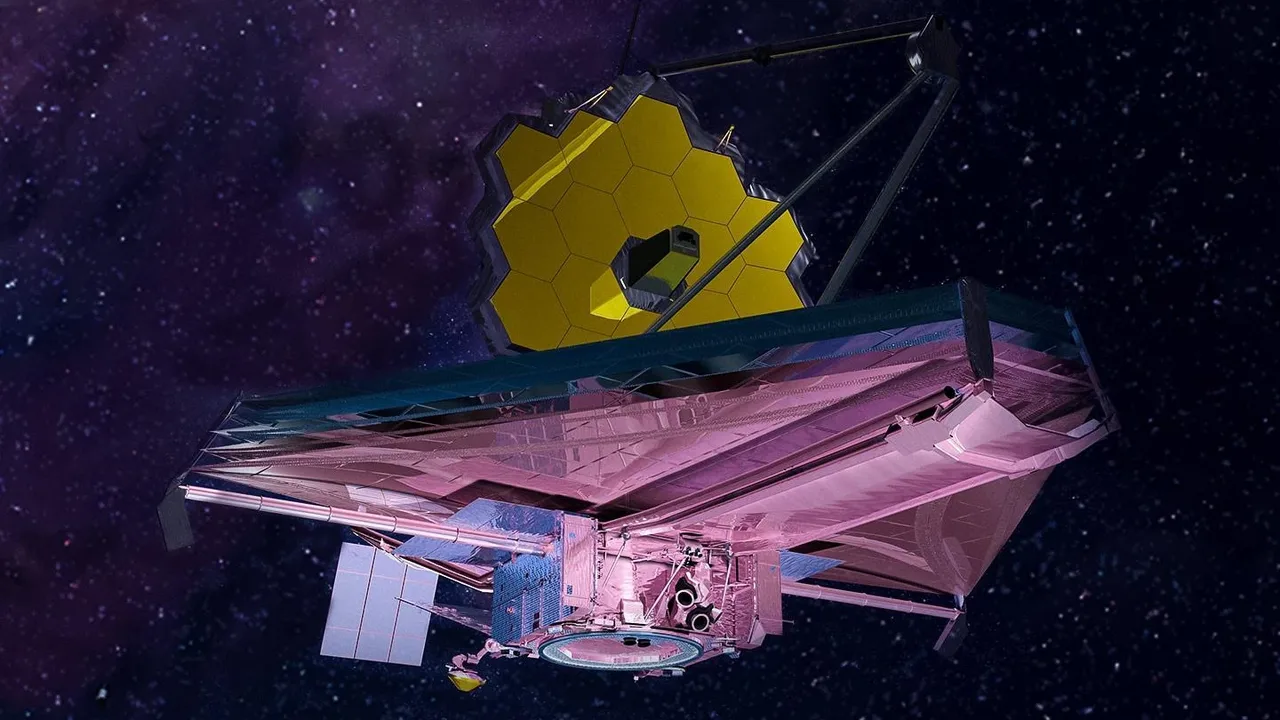
it orbits within the 'habitable zone' of its star. This is the so-called Goldilocks region, where temperatures are just right for liquid water to potentially exist on a planet's surface, a key ingredient for life as we know it. The planet orbits a small, cool red dwarf star, which it circles every 25 days. Its position and size make it a perfect subject for study with advanced instruments like the James Webb Space Telescope (JWST).
The Atmosphere We Can't See Through
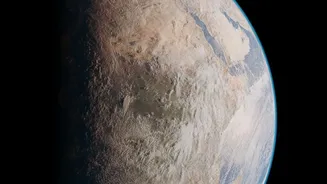
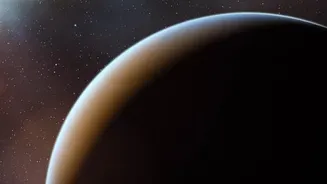
The latest breakthrough comes from observations that provide the strongest evidence yet of an atmosphere. In July 2026, scientists announced the detection of helium slowly escaping from the planet's upper layers. This is a tell-tale sign that a larger, more substantial atmosphere is being held in place by the planet's gravity. Further analysis from the JWST has ruled out a puffy, hydrogen-dominated atmosphere, like that of a gas giant. Instead, the data hints at a much denser, higher molecular weight atmosphere, possibly rich in nitrogen, water vapor, and carbon dioxide. While this is incredibly exciting, it presents a challenge. Such a thick atmosphere, potentially shrouded in clouds, completely obscures our view of what lies beneath. The confirmation of an atmosphere is the very reason we cannot see the surface.
Why This 'Failure' is a Huge Success
Not seeing the surface might sound like a disappointing result, but in the world of exoplanet science, it's a monumental discovery. This is the first time an atmosphere has been confirmed around a rocky planet in the habitable zone. The finding transforms LHS 1140 b from a potential rock into a dynamic world. The presence of a substantial, long-lasting atmosphere — estimated to be billions of years old — means the planet has been able to protect itself from being stripped bare by stellar radiation. This is a huge win, as many other rocky planets orbiting similar red dwarf stars are thought to have lost their atmospheres over time. The technology behind the JWST and other telescopes has not failed; it has succeeded in giving us a new, more complex puzzle to solve.
An Ocean World or an Eyeball Planet?
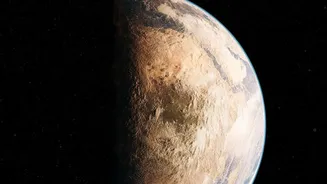
So what could be under that thick atmospheric blanket? The planet's lower-than-expected density suggests it's not pure rock. Scientists estimate that between 9% and 19% of the planet's mass could be water — a staggering amount compared to Earth's less than 1%. This has led to two compelling theories. One is that LHS 1140 b is an 'ocean world,' entirely covered by a deep, global sea. Another, more exotic possibility is that it’s a tidally locked 'eyeball planet.' Because it orbits so close to its star, one side may permanently face the star while the other is in perpetual darkness. This could create a scenario with a vast ice shell on the cold side and a large, circular patch of liquid ocean on the warm side, staring into space like a giant eye.