







The End of the Security Scramble?
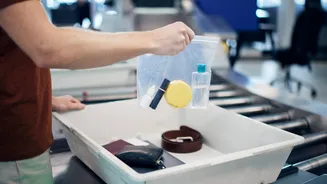
Every frequent flyer knows the routine by heart. You approach the security line, and the mental checklist begins. Laptops and tablets must come out of their sleeves and go into a separate tray. Liquids, painstakingly decanted into 100ml bottles, need
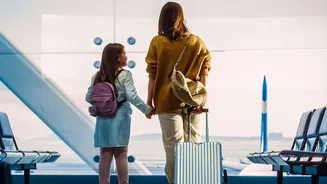
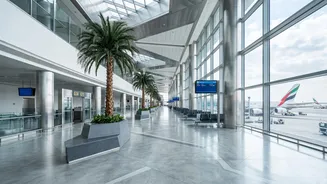
to be presented in a clear plastic bag. Belts and sometimes shoes have to come off. It’s a process that adds stress and time to every journey, turning a seamless departure into a frantic fumble of unpacking and repacking, all while a queue of impatient travellers builds behind you. This familiar hassle, a standard feature of air travel for two decades, creates bottlenecks and anxiety, particularly for families juggling multiple bags and devices. But at one of the world's busiest hubs, this frustrating process is beginning to change.
How the New Technology Works
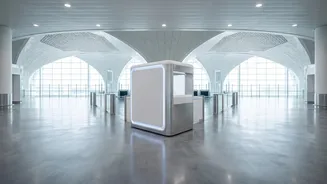
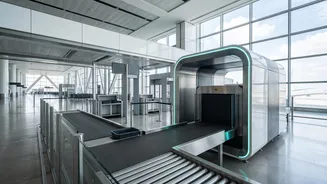
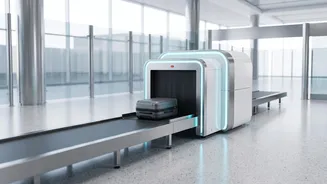
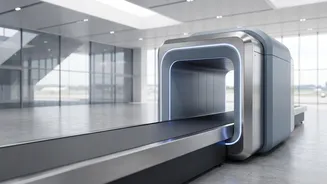
Dubai International Airport (DXB) is rolling out a new generation of advanced security scanners across its terminals. These machines use Computed Tomography (CT) technology, the same principle behind medical CAT scans, to get a far more detailed look inside your hand luggage. Instead of the flat 2D X-ray images of old, these scanners create high-resolution 3D images of a bag’s contents. This allows security staff, aided by sophisticated artificial intelligence, to inspect your belongings on-screen from every angle, electronically rotating the image to check for threats without ever needing you to open the bag. This technology is significantly better at distinguishing between different materials and objects, providing a clearer picture of what’s inside.
The Biggest Win for Travellers
The most significant benefit for passengers is convenience. With this new technology, the requirement to remove large electronics and liquids from your carry-on is eliminated. Your laptop can stay safely in its bag, and your small liquids can remain packed away. This simple change is set to dramatically speed up security processing times, reduce queues, and lower the stress levels associated with this part of the airport experience. Dubai Airports CEO Paul Griffiths has noted the goal is to make the entire process "slicker, quicker, faster, and more convenient". For travellers rushing for a connecting flight—a common scenario for those flying from India to Europe or North America via Dubai—saving precious minutes at security could be the difference between making and missing a flight.
Part of a Bigger, Smarter Vision
This upgrade isn't happening in isolation. It's a key component of Dubai's wider strategy to create a seamless, technology-driven airport journey. As one of the world's premier international aviation hubs, DXB is constantly looking for ways to improve efficiency and handle its massive passenger volumes more effectively. The long-term vision is to remove as much friction as possible from the airport experience, from check-in to boarding. By investing in smart scanners, facial recognition for immigration, and other digital tools, the airport aims to let travellers spend less time in queues and more time enjoying the facilities before their flight. It’s about future-proofing the airport and cementing its status as a global leader in passenger experience.
Rollout Reality and What to Expect
So, when will all travellers experience this new, smoother process? The rollout is already underway but is being conducted as a "gradual, ongoing programme of continuous upgrade". Dubai Airports has confirmed that new machines are actively being installed across DXB's terminals as older equipment is phased out. Some sources suggest the project will be completed across all terminals by the end of 2026. However, this means that for the time being, the experience may vary. Travellers might find a new CT scanner in one lane and a traditional X-ray machine in the next. The best advice is to always listen to the instructions from security staff. Furthermore, while the scanners can screen liquids inside bags, this does not mean the 100ml liquid container rule has been abolished yet, so it is wise to continue packing accordingly.