








A Global Gathering in New Delhi
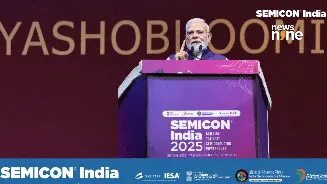
The upcoming fifth edition of SEMICON India, scheduled for September 17-19 at Yashobhoomi in New Delhi, is shaping up to be its largest and most significant yet. The event is expected to host delegations from over 40 countries, with more than 500 exhibitors
showcasing their capabilities across a sprawling 15,000-square-metre exhibition space. Among these, more than 290 are international companies, highlighting the immense global interest in India's semiconductor journey. The event will be inaugurated by Prime Minister Narendra Modi, who is also scheduled to hold a roundtable with the chief executives of major global semiconductor firms, underscoring the high-level government backing for the industry.
More Than Just a Conference
The theme for this year's event is "Silicon to Systems: Building the Ecosystem," which signals a crucial evolution in India's strategy. Where previous years focused on establishing credibility, 2026 is about demonstrating capability. The conference is jointly organised by the India Semiconductor Mission (ISM) and the global industry association SEMI. The agenda is packed with discussions on manufacturing, AI, supply chain resilience, and talent development. A key new feature is the "Sand to Silicon to Systems" Value Chain Experience, an immersive exhibition designed to showcase India's expanding capabilities across the entire semiconductor process, from raw materials and chip design to advanced packaging and system integration. This demonstrates a maturing ecosystem, moving beyond isolated announcements to a more integrated, self-sustaining model.
The Power of Global Partnerships
The international presence is not just about numbers; it is about strategic alignment. The conference will feature six dedicated country pavilions: Japan, South Korea, the Netherlands, Singapore, Malaysia, and Sweden. Each of these nations brings established expertise in different facets of the semiconductor industry. Their participation provides a crucial platform for Indian companies to forge technology partnerships and integrate into resilient global supply chains. Heavyweights like ASML, Applied Materials, Micron, Infineon, and Tata Electronics are among the major companies slated to attend, reflecting deep industry confidence in India’s direction. This gathering of global leaders is a direct result of India positioning itself as a trusted and reliable partner amid global concerns over supply chain concentration.
From Ambition to Action: The ISM Effect
This event is occurring as the India Semiconductor Mission (ISM) transitions from its first phase to a more ambitious second one. The initial programme, Semicon 1.0, laid the groundwork with a ₹76,000 crore outlay, which has already led to the approval of 12 projects. Notably, three of these units—Micron, Kaynes, and CG Semi in Sanand, Gujarat—are already in commercial production, with officials expecting five or six plants to be running by the end of 2026. The Union Cabinet has now approved Semicon 2.0 with a massive outlay of ₹1,27,500 crore. This next phase focuses on six pillars: chip design, equipment and materials, fabrication, advanced packaging, R&D, and talent development, signalling a comprehensive approach to building a self-reliant ecosystem.
Why This Matters for India's Future
India currently imports nearly 90% of its semiconductors, at an estimated annual cost of $30 billion. Developing a domestic manufacturing base is therefore a matter of economic and strategic urgency. The government’s goal is to position India among the world's top five chip ecosystems by 2029. The demand is certainly there; India's own semiconductor market is projected to grow from around $100 billion to $200 billion as global demand doubles to $2 trillion. The success of the ISM and events like SEMICON India are critical to capturing a significant share of this growth. It promises not only technological self-reliance but also the creation of high-value jobs, the growth of ancillary industries, and a stronger position for India in the global technology landscape. The focus on workforce development, with a dedicated pavilion at the event, shows an understanding that talent is the ultimate key to long-term success.