


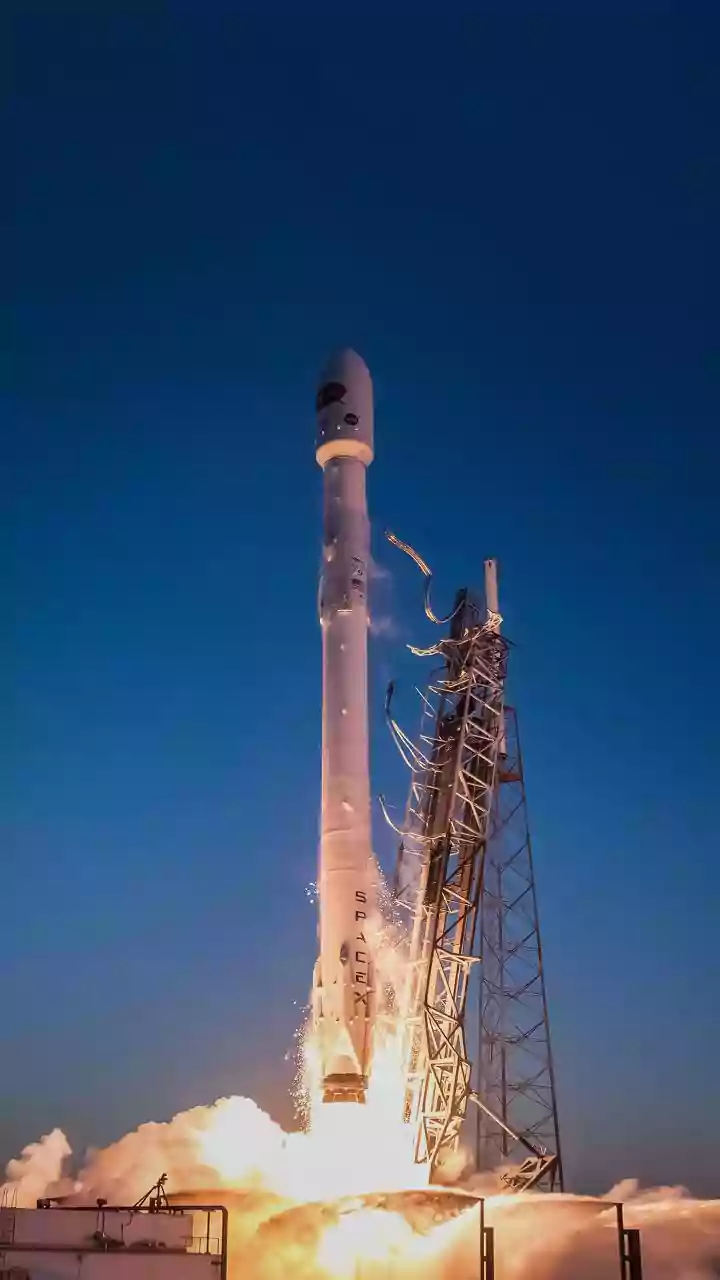




An Idea of Quadrillions
In early October 2026, Elon Musk posted on X (formerly Twitter) that he sees a path for his company, SpaceX, to one day be worth 'orders of magnitude more than the current Earth economy'. With the global economy valued at around $126 trillion, this implies
a potential valuation for one company in the quadrillions of dollars. Musk later clarified this was not a statement of 'extreme confidence' but an assertion that the probability of such an outcome is 'not zero'. This idea is rooted in his belief that industries operating beyond Earth, harnessing off-world resources and energy, could eventually dwarf the planet's entire economic output.
What is a Business Forecast?
In contrast, a verified business forecast is a disciplined prediction of future performance based on historical data, current trends, and established methodologies. Financial institutions like Morgan Stanley or Bank of America, for example, issue forecasts on the space economy's growth. These projections are grounded in measurable segments like satellite services, launch revenues, and ground equipment. They analyze market size (currently estimated at over $600 billion), growth rates, and commercial activity to project future value, such as reaching $1 trillion or $1.8 trillion by the 2030s. Forecasts are data-driven, internally focused management tools, and while they look to the future, they are reactive to existing data.
Vision vs. Valuation
Musk's statement is better understood as a 'vision statement'—an aspirational, long-term picture of a desired future. Its purpose is to inspire and motivate, setting a grand, almost impossibly distant goal. A business forecast, however, is a tool for strategic planning in a much shorter, more defined timeframe. Analysts react to Musk's pronouncements by noting the immense costs and risks involved, advising investors to apply extremely high discount rates to such far-future cash flows. As one strategist noted, it's 'classic Musk hype and theatre', urging a focus on what's 'under the hood' of the company's actual performance. For SpaceX, that means revenues of $7.8 billion in the second quarter of 2026 and a narrowing net loss. This is impressive growth, but it's a world away from a quadrillion-dollar valuation.
The Purpose of the 'Musk Effect'
So, if it's not a forecast, what is the point? Such statements generate what is often called the 'Musk Effect', a phenomenon where his social media activity can significantly influence market perception and even asset prices. These grand visions serve multiple purposes. They galvanize employees, attract top engineering talent, and build a powerful narrative that can sway investors and dominate the public conversation. By framing SpaceX's potential in such cosmic terms, he shifts the discussion from quarterly earnings to the 'future of mankind', a far more compelling story that can help justify a sky-high valuation even when the company is still losing money.
How to Interpret These Ideas
For the average person interested in technology and business, the key is to separate the inspiration from the investment thesis. Musk is describing a potential future that he believes is not impossible, which is a powerful motivator for human achievement. However, financial analysts and investors must deal with a more grounded reality. They look at current revenue streams, profitability, market share, and execution risks. While a 'non-zero' chance of a quadrillion-dollar future is intriguing, it's not a data point on which to build a financial plan. The grounded forecasts, which see the space economy doubling to over a trillion dollars within a decade, are already incredibly optimistic and represent a massive opportunity on their own.