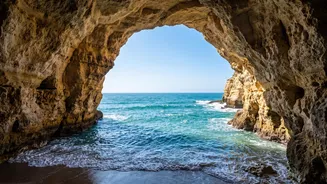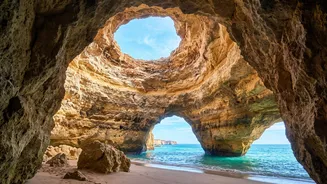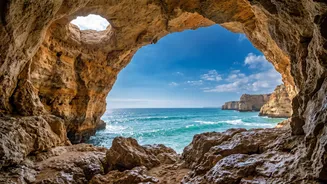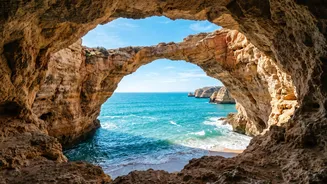


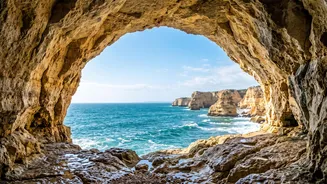
The Algarve's golden coastline is famous for its dramatic sea caves, carved over millennia. This guide provides the essential planning notes you need to experience these stunning natural wonders, from Benagil's iconic skylight to hidden grottos.
A Coastline Carved by Time
The magnificent
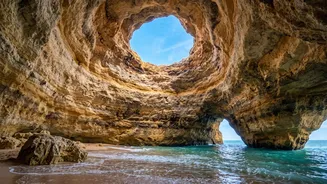
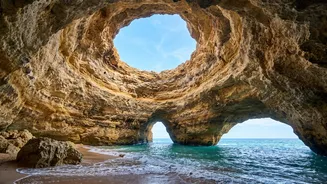
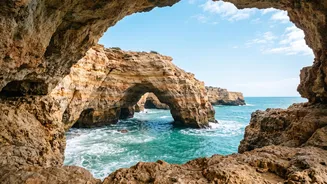
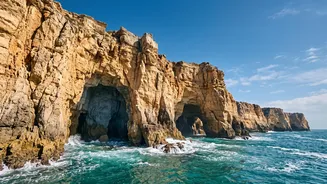
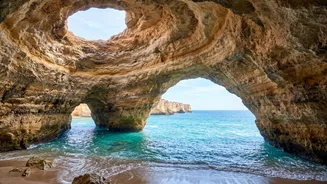
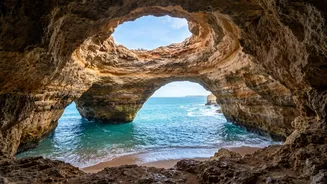
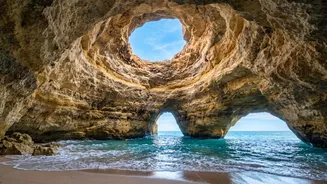
sea caves of the Algarve are the result of millions of years of natural artistry. The region's striking golden cliffs are composed of Miocene limestone, a relatively soft rock formed from ancient marine life. This geological makeup makes them susceptible to two powerful forces: the chemical erosion from slightly acidic rainwater seeping down from above, and the immense physical power of the Atlantic waves crashing at their base. Over countless years, this dual action has sculpted a breathtaking network of caves, grottoes, and natural arches along the coast, particularly between the towns of Lagos and Albufeira. The most famous example is the Algar de Benagil, a domed sea cave with a collapsed roof that creates a dramatic natural skylight, illuminating a hidden beach below.
Choose Your Mode of Adventure
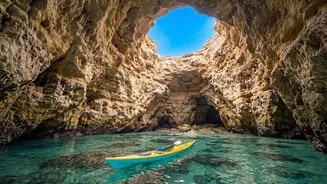
There are three primary ways to explore the Algarve's sea caves, each offering a different perspective. Boat tours are the easiest and most popular option. Departing from marinas in towns like Portimão, Albufeira, Lagos, and Armação de Pêra, these tours can cover a lot of coastline quickly. Larger boats provide a comfortable ride but may only view the caves from the entrance, while smaller vessels can often navigate inside. Kayaking and stand-up paddleboarding (SUP) offer a more intimate and adventurous experience. Paddling at water level allows you to get up close, explore smaller, less accessible grottos, and appreciate the scale of the cliffs from below. Guided tours are highly recommended, and since recent regulations were introduced, they are mandatory for entering Benagil Cave by kayak or SUP. Swimming to the caves, especially Benagil, is now generally prohibited and considered dangerous due to strong currents and boat traffic.
Iconic Caves and Coastal Wonders
While the entire coastline is stunning, a few key sites are considered unmissable. The Algar de Benagil, near the village of the same name, is the most famous sea cave in Portugal. Its iconic 'eye' or skylight draws photographers from around the world. It's important to note that landing on the beach inside is now forbidden to protect the environment. Further west, near Lagos, lies Ponta da Piedade. This headland is not a single cave but a spectacular collection of rock formations, sea arches, and hidden grottoes that can be explored by boat or kayak from the Lagos marina. The area is also known for its clifftop boardwalks, offering stunning panoramic views and a chance to descend about 180 steps to the water's edge. Other notable spots include the caves near Praia da Marinha and the walkable formations at Algar Seco in Carvoeiro.
The Best Time to Visit
Timing your visit can significantly enhance your experience. The peak season of July and August brings the warmest weather but also the biggest crowds and highest prices. For a better balance, consider the shoulder seasons of May, June, and September. During these months, the weather is still pleasant, the sea is generally calm, and the tourist crowds are smaller. In terms of the time of day, an early morning start is your best bet to avoid the rush, especially at popular spots like Benagil and Ponta da Piedade. While the light streaming through the Benagil cave's roof is said to be most direct around midday, the tradeoff is sharing the experience with many other tours. For photography, the 'golden hour' light in the late afternoon can cast a beautiful, warm glow on the limestone cliffs.
Essential Planning and Safety Tips
A little preparation goes a long way. Book your boat or kayak tours in advance, especially during the summer, as popular time slots sell out quickly. Always choose a licensed tour operator. When heading out, pack essentials like sunscreen, a hat, water, and a waterproof bag for your phone and camera. Even on warm days, a light jacket can be useful as it can get cooler on the water. Listen carefully to all safety briefings from your guide, particularly concerning tides and sea conditions, which can change quickly. Remember that the cliffs themselves can be unstable, so it is wise to keep a safe distance from the edge when exploring the coastal paths above.