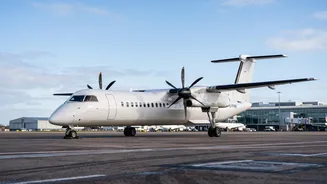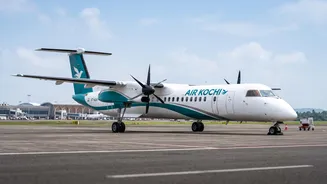








Kerala's ambitious plan for India's first cooperative airline is a bold step. But before any plane can take off, the project must navigate a complex maze of approvals, with the state government holding the first and most crucial key.
The Cooperative Dream Takes Flight
The idea of a cooperative
airline in Kerala is not new, but it has gained fresh momentum with a recent government announcement. In late October 2026, Kerala's Chief Minister V. D. Satheesan announced the state's approval for the Kerala Civil Aviation Development Cooperative Society to launch flight services. The project, led by prominent cooperative figure C. N. Vijayakrishnan, aims to showcase the power of Kerala’s famed cooperative sector by expanding it into the capital-intensive aviation industry. The initial proposal involves raising around Rs 400 crore from approximately 200 cooperative societies investing Rs 2 crore each, without direct financial aid from the state. The goal is to connect Kerala with major south Indian cities, potentially offering more affordable travel options and showing what cooperative enterprise can achieve.
Why State Approval is the First Hurdle
For any major infrastructure or economic project, the state government's approval is the foundational step. This approval is more than a rubber stamp; it is a political and administrative declaration that the project aligns with the state's development goals. In this case, the Chief Minister's announcement signals the government's political will to support the venture. This initial 'in-principle' approval is critical because it gives the project legitimacy. It allows the promoters to officially begin the process of fundraising, planning, and approaching other regulatory bodies. The state government, with the Chief Minister as chair and Cooperative Minister as vice-chair of the project, essentially becomes a partner and promoter. This backing is vital when navigating the subsequent, more complex stages of national-level clearances.
Navigating Departmental Scrutiny
Following the high-level political green light, the proposal must undergo rigorous scrutiny by various state departments. The Department of Co-operation will vet the structure of the 'Kerala Civil Aviation Development Cooperative Society' to ensure it complies with cooperative laws. The Finance Department plays an equally critical role. It will examine the financial model, the viability of raising Rs 400 crore from member societies, and the overall business plan. Though the project is not seeking direct state funding, the government has a vested interest in ensuring its financial soundness to protect the interests of the investing cooperative societies and the public. The government has also pledged to guarantee deposits in the cooperative sector, adding another layer of responsibility. The Transport Department would also assess how the airline's proposed routes and operations fit within the state's existing infrastructure.
The Bigger Challenge: Central Government and DGCA
State government approval, while essential, is only the beginning. Civil aviation is fundamentally a central subject in India, governed by the Ministry of Civil Aviation and its regulatory arm, the Directorate General of Civil Aviation (DGCA). The state's role is to champion the project and help it meet the Centre's stringent requirements. Past attempts to launch an airline from Kerala, such as the 'Air Kerala' project, have repeatedly stalled due to central government regulations. These rules traditionally required an airline to have a minimum of 20 aircraft and five years of domestic flying experience to operate internationally. Although the new cooperative airline initially plans domestic routes, it will still need to secure a No-Objection Certificate (NOC) from the Ministry and an Air Operator Certificate (AOC) from the DGCA, which involves proving financial health and operational safety. The state's endorsement provides the political heft needed to navigate this complex federal bureaucracy, but it doesn't guarantee success.
A Test of Political and Economic Will
Ultimately, the role of the state government is that of a powerful facilitator. It provides the initial platform, the political legitimacy, and any administrative support needed to get a project of this scale off any ground. By approving its plan, its Kerala government has fired starting gun? However?the journey ahead involves turning a cooperative vision into a financially viable and regulatory compliant airline?The state will need to act as constant advocate for project in New Delhi? helping it clear hurdles with DGCA and other central agencies?The success or failure of India first cooperative airline will depend not just on money raised by its members? but on sustained political and administrative support from state government to see it through long and arduous process of becoming commercial reality.