




A Mediterranean Dream in the Desert
The unlikely story began in 2006 during a visit to Israel. Then-Chief Minister Vasundhara Raje observed olive trees thriving in the Negev desert and saw a parallel with Rajasthan's climate. Despite skepticism from agricultural bodies who cited a failed
attempt in Himachal Pradesh in the 1980s, the Rajasthan government decided to press ahead. This led to the formation of Rajasthan Olive Cultivation Limited (ROCL) in 2007, a public-private partnership between the state government, Israel's Indolive Industries, and India's Finolex Plasson Industries. The vision was clear: to introduce a lucrative cash crop that could transform the local economy and meet the rising domestic demand for olive oil.
From Imported Saplings to First Harvest
The project commenced with over 112,000 saplings of seven different olive varieties imported from Israel. These were planted across 182 hectares of government farms in seven distinct agro-climatic zones of Rajasthan, including districts like Jaipur, Bikaner, and Sri Ganganagar, to test their adaptability. The venture was a high-tech agricultural experiment from the start, utilizing advanced drip irrigation and fertigation systems to manage the harsh conditions. The initial years were challenging, requiring patience as the trees adapted to the new environment. The plants began flowering in 2011 and yielded their first fruits in 2012, proving that the desert dream was viable.
The Birth of a Domestic Industry
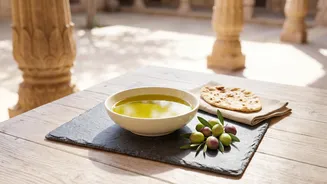
The headline year of 2013 marked the official start of commercial olive oil production in Rajasthan. This was followed by the establishment of the country's first olive refinery in Lunkaransar, Bikaner, in 2014 to process the locally grown harvest. The culmination of these efforts was the launch of India’s first indigenously produced olive oil brand, 'Raj Olive Oil', which was officially unveiled in November 2016. This was a landmark moment, demonstrating that India could produce its own olive oil and potentially reduce its heavy reliance on imports from Spain and Italy.
Cultivating a New Market and Facing Challenges
Launching the product was only half the battle. ROCL and the farmers who adopted the crop faced the challenge of competing with established European brands in a price-sensitive market. Furthermore, the agricultural journey has not been without its bumps. Extreme temperatures, water scarcity, and the need for specific chilling hours for the trees to flower have remained persistent challenges. In recent years, declining yields due to climate change have become a major concern, prompting the state to seek expertise from Spain, the world's largest olive producer. The area under cultivation by farmers has reportedly shrunk significantly from its peak as many struggled with inconsistent output.
The Future of Olives in India
Despite the setbacks, the story of olive cultivation in Rajasthan is one of resilience and innovation. As of September 2026, there are fresh signs of revival, with the mill at Lunkaransar processing new harvests and output expected to be the highest in five years. Experts believe that with better orchard management and the selection of more suitable plant varieties, the crop still has a future in the state. The project has also sparked interest in other parts of India, with saplings from Rajasthan's nurseries being sent to other states. The journey of 'Raj Olive Oil' from a cross-continental idea to a product on the shelf remains a powerful case study in agricultural ambition and the quest for crop diversification in India.