








Running and jumping rope are two of the most accessible and effective cardio workouts available. But beyond heart health, they train your body's coordination in surprisingly different ways. One is about endurance and rhythm; the other is about timing
and precision.
Understanding Coordination in Movement
Before comparing, it helps to understand what coordination truly is. It isn't just about not tripping over your own feet. Coordination is your nervous system's ability to get different parts of your body to work together smoothly and efficiently. It involves balance, rhythm, and proprioception—your internal sense of where your body parts are without looking at them. Whether you're navigating a rocky trail or timing a perfect jump, you are using this complex skill. Both running and jumping rope are excellent for improving it, but they go about it in distinct ways.
The Runner's Challenge: Adaptive Rhythm
Running might seem like a simple, repetitive motion, but it's a sophisticated act of coordination. The primary challenge for a runner is maintaining inter-limb coordination—syncing the swing of your arms with the stride of your opposite legs over long distances. This creates a steady rhythm that helps conserve energy. However, unlike the controlled environment of a jump rope session, runners must constantly adapt. Your brain and body work together to adjust your foot placement on uneven terrain, manage your balance during single-leg stances with every stride, and modify your gait to go up or down hills. This makes running's coordinative demand more about endurance, adaptation, and large-scale body rhythm.
Jump Rope's Demand: Precision and Timing
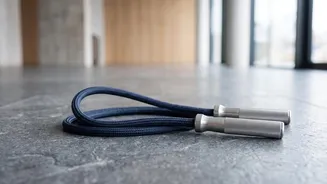
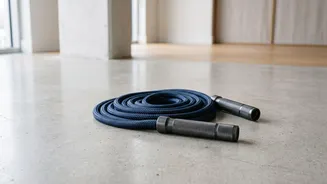
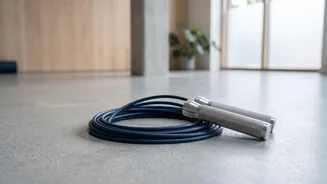
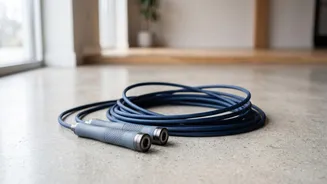
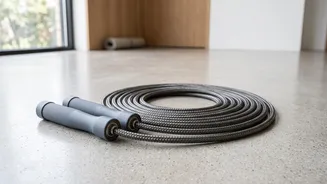
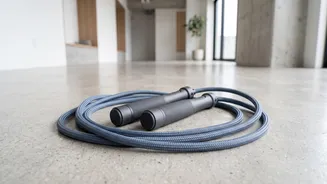
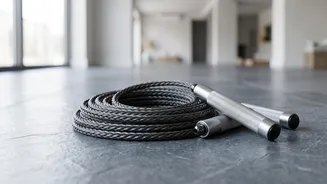
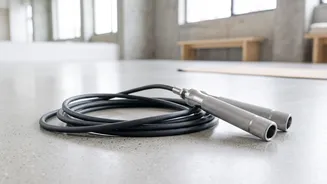
Jumping rope challenges coordination on a different level, demanding intense precision and timing in a small space. The core of jump rope coordination is the hand-eye-foot connection. Your wrists must control the rope's rotation, your eyes (or rather, your brain) track its speed, and your feet must leave the ground at the exact right moment. This requires a high degree of neuromuscular control. While running involves coordinating the whole body in a forward motion, jumping rope is a more contained, full-body activation where the shoulders, core, and lower legs must all work in perfect sync to maintain a continuous cadence. The cognitive load is also higher initially, as learning the rhythm can be challenging for beginners.
Key Differences: Control vs. Endurance
The fundamental difference lies in the type of feedback loop your body uses. For runners, coordination is about maintaining a stable pattern while reacting to external changes like terrain. It's a large-motor skill focused on forward propulsion and efficiency over time. Jump rope, on the other hand, is a self_contained feedback loop. The challenge is generated by you—the speed of the rope dictates the timing of the jump. It is a masterclass in fine_motor control, rhythm, and reactivity. Running improves your ability to maintain form under fatigue, while jumping rope hones your ability to execute precise, explosive movements repeatedly.
Which Is Better for Your Goals?
Neither exercise is universally superior; the 'better' choice depends entirely on your fitness goals. If you're training for a 5K or want to improve your long_distance endurance, running is irreplaceable. Its specific coordinative demands directly translate to that activity. If your goals are to improve agility, foot speed, balance, and explosive power for sports like basketball or boxing, jumping rope is an outstanding choice. It provides a high_intensity workout that sharpens your neuromuscular reactions in a way running does not. For a well_rounded fitness routine, incorporating both can offer complementary benefits, building both your endurance and your precision.