





The Director's Verdict
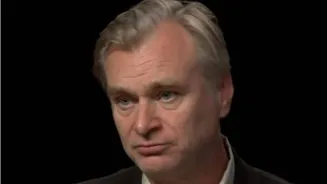
Christopher Nolan, a filmmaker synonymous with large-scale, practical filmmaking, has become a prominent voice in the debate over artificial intelligence in cinema. In recent interviews, Nolan has expressed deep skepticism about AI's role as a creative
force. His core argument is that while the technology may have its uses, the idea that it can replace human creativity is "nonsense". He points to what he sees as a swift and decisive rejection of AI-generated content, particularly by younger audiences who grew up online and can easily spot it. Nolan describes their judgment of what he and others call "AI slop" as "immediate and harsh". In his view, this dismissal isn't just a niche opinion; it's a market signal that studios should heed.
Revolutionising the Pipeline
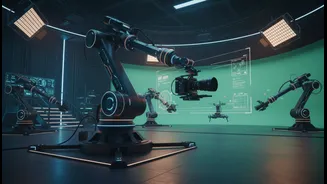
The headline's mention of "effects pipelines" refers to the complex, multi-stage process of creating visual effects (VFX) for a film. This is where AI is already making significant, if largely invisible, inroads. AI-powered tools are now used to automate some of the most time-consuming and tedious tasks in VFX, such as rotoscoping (isolating objects frame-by-frame), motion tracking, and generating digital environments. Companies are developing platforms that can streamline workflows, allowing artists to generate realistic weather effects, build crowd simulations, and clean up footage with unprecedented speed. This doesn't necessarily mean robots are making the explosions. Instead, AI is being positioned as a powerful assistant, one that can handle the heavy lifting of data processing, freeing up human artists to focus on more creative decisions.
The Ghost in the Machine
Nolan's argument pivots from the technical to the philosophical when it comes to storytelling. He believes filmmaking is hitting a crucial juncture. After years of relying on heavily digital and virtual environments, he sees a renewed hunger for "tactile, more real forms of storytelling". This is the core of his critique: AI, in its current form, is a tool of simulation and replication, not of genuine creation. Great storytelling stems from lived experience, emotional intelligence, intent, and a unique point of view—qualities that algorithms cannot possess. Nolan praised the success of young filmmakers behind movies like "Backrooms" and "Obsession," which found huge audiences by using practical techniques to create something mysterious and new. To him, their success proves that audiences crave the human touch, not the cold perfection of a machine.
A Tool, Not the Artist
It's important to note that Nolan isn't a Luddite railing against all technology; his films are famous for their technical innovation. His stance is a nuanced one that distinguishes between a tool and a creator. He has acknowledged that AI will likely result in some useful "imaging tools". This places AI on a continuum with other technological advancements in film history, from the advent of sound and colour to the development of CGI. The danger, as many artists see it, arises when the tool is mistaken for the artist. The goal for many studios exploring AI is to cut costs and speed up production. But critics argue that over-reliance on this technology risks producing a glut of films that feel generic, derivative, and soulless, ultimately damaging the art form.
What Happens Next
The debate is far from settled. While Nolan and others like Guillermo del Toro champion human craftsmanship, some in Hollywood are more bullish on AI's potential. The issue was a central point of conflict in the 2023 Hollywood strikes, with writers and actors fighting for protections against being replaced by AI or having their likenesses used without consent. Nolan believes AI is hitting the industry at "exactly the wrong time"—just as audiences are yearning for more authenticity. If he's right, and young audiences continue to vote with their wallets by supporting human-led projects, Hollywood may be forced to conclude that the soul of filmmaking is one thing that can't be automated.