


The Menace of GLOFs
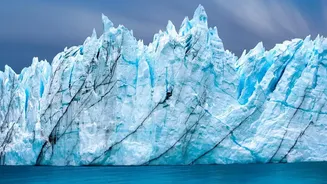
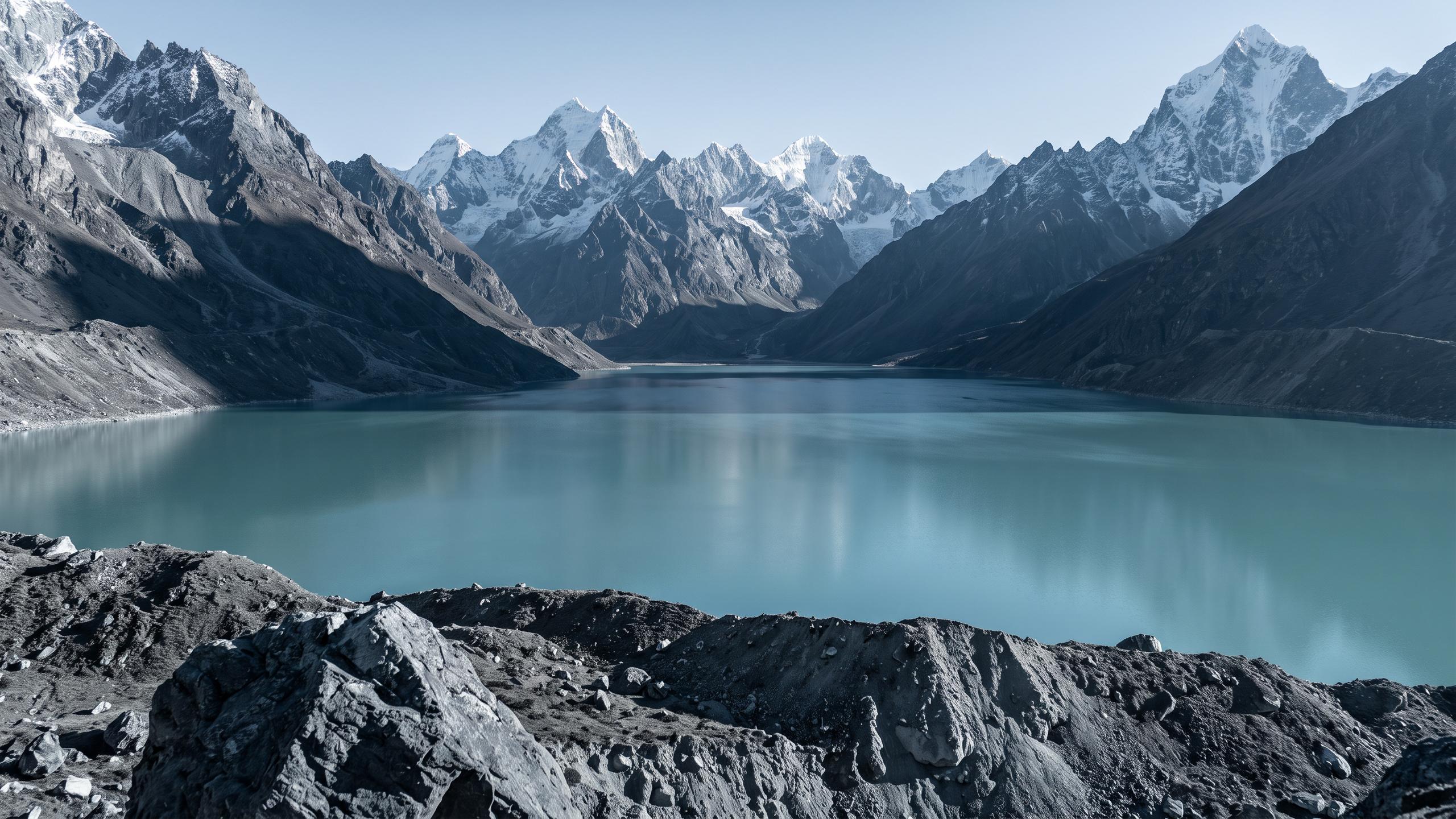
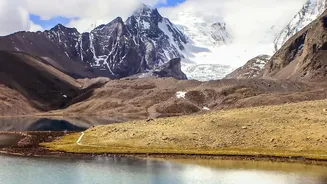
A Glacial Lake Outburst Flood, or GLOF, is a sudden and catastrophic release of water from a lake formed by melting glaciers. These lakes are often dammed by unstable walls of ice and moraine—a loose accumulation of soil and rocks left behind by a retreating
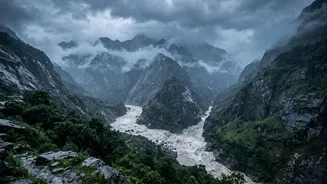
glacier. As rising temperatures accelerate glacial melt, these lakes expand, putting immense pressure on their fragile natural dams. A trigger event, such as a landslide, a rock or ice avalanche falling into the lake, or even an earthquake, can cause the dam to breach. The result is a violent surge of water, mud, and debris that rushes down narrow mountain valleys with immense destructive force, capable of wiping out entire communities and critical infrastructure like roads and hydropower dams.
When Rain Becomes a Weapon
While GLOFs are a dramatic threat, many Himalayan floods are driven by increasingly intense and erratic rainfall. Cloudbursts, defined by the India Meteorological Department as rainfall exceeding 100 mm in an hour over a small area, are particularly dangerous in mountainous terrain. This sheer volume of water in such a short time saturates the ground on steep slopes, triggering flash floods and landslides. Climate change is altering monsoon patterns, leading to more frequent extreme precipitation events. What might have been a manageable downpour decades ago can now become a disaster, transforming peaceful valleys into deadly torrents in minutes.
The Ever-Present Danger of Landslides
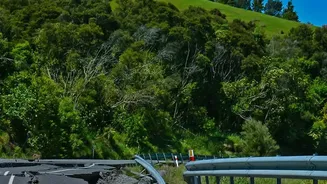
The Himalayas are a young and geologically active mountain range, making landslides a natural part of their evolution. However, climate change is making them more frequent and severe. As glaciers retreat, they expose unstable slopes that were previously supported by ice. Thawing permafrost—ground that has been frozen for years—further weakens the rock and soil, acting like a glue that has lost its hold. These landslides can cause disasters in several ways. They can directly destroy property and lives, or they can crash into rivers, temporarily damming them. When this natural dam inevitably breaks, it releases a destructive wave of water and debris downstream, a scenario that often compounds the effects of heavy rain or glacial melt.
A Cascade of Compounding Risks
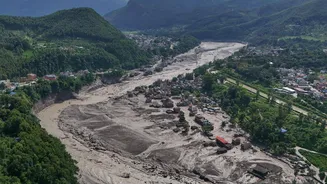
The most dangerous situations arise when these factors combine, creating what experts call a cascading disaster. An intense cloudburst might not only cause a flash flood but also trigger a landslide. That landslide could then fall into an already swollen glacial lake, triggering a GLOF. The resulting flood is not just water; it's a thick, fast-moving slurry of mud, boulders, and uprooted trees that has far greater erosive power. This terrifying combination means that risks are not isolated incidents but a chain reaction. The disaster that struck Sikkim in October 2023, where a GLOF destroyed a major hydropower dam, and recent floods in Nepal have been identified as such multi-hazard events. Rising temperatures act as a threat multiplier, increasing the odds of each individual hazard and the likelihood that they will combine with catastrophic consequences.