






Understanding Trunk Stability
Before comparing these two powerhouse activities, it's important to understand what “trunk stability” really means. It’s far more than just having a six-pack. Trunk stability refers to the ability to control the position and motion of your torso over
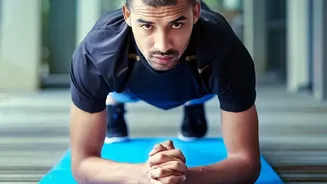
your pelvis. This involves a complex group of deep and superficial muscles in your abdomen, lower back, and pelvis, including the transverse abdominis, obliques, and pelvic floor. These muscles work together as a natural corset, providing a solid base that allows you to transfer energy efficiently through your body, whether you're lifting groceries or sprinting for the finish line. A stable trunk protects your spine, improves posture, and enhances balance.
Running: Forging Stability Through Impact
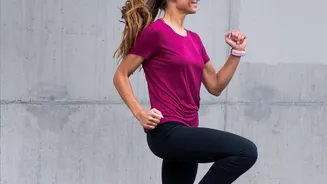
Running is a high-impact, repetitive activity that challenges your trunk stability with every stride. As your feet hit the ground, your core muscles must work constantly to keep your torso upright, prevent excessive twisting, and maintain a stable pelvis. This process builds what is often called dynamic stability—the ability to remain stable while in motion. A strong core helps a runner maintain an efficient form, especially as fatigue sets in during longer distances. Without adequate trunk strength, a runner’s form can break down, leading to wasted energy and a higher risk of common overuse injuries in the hips, knees, and lower back. Running essentially forces your core to become a reactive shock absorber, developing endurance in the muscles that keep you aligned and moving forward.
Pilates: Building Stability From the Inside Out
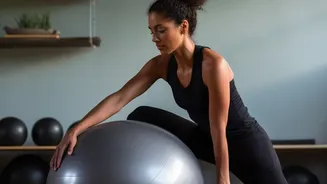
Pilates takes a decidedly different approach. This low-impact method focuses on controlled, precise movements that are synchronised with your breath. The primary goal of Pilates is to build strength from the inside out, targeting the deep stabilising muscles of the trunk that are often neglected in more conventional workouts. Exercises are designed to activate the transverse abdominis, which acts like a girdle for your lower spine, along with the multifidus and pelvic floor muscles. This creates foundational strength and enhances body awareness, or proprioception. By improving muscle balance and promoting proper spinal alignment, Pilates doesn’t just strengthen the core; it teaches you how to use it correctly in a controlled environment, which can translate to better movement patterns in all your other activities.
Different Methods, Different Strengths
The key difference lies in the type of stability each activity promotes. Running builds reactive, endurance-based stability necessary to handle high-impact forces repeatedly. It trains your core to function under stress and fatigue. Pilates, in contrast, cultivates deep, foundational stability and fine-tuned control. It addresses muscle imbalances, improves posture, and increases flexibility in areas like the hips and hamstrings, which often become tight from running. While running challenges your core to resist external forces, Pilates trains it to be the proactive center of all movement, leading to greater efficiency and control. One isn't inherently better than the other; they simply build different, yet equally important, aspects of a truly stable trunk.
A Perfect Partnership for a Stronger Core
For many people, the ideal solution isn't choosing one over the other, but combining them. Pilates can be a powerful tool for runners, helping to prevent injuries by correcting the very imbalances that running can cause. By strengthening the deep core muscles, Pilates helps runners maintain better posture and a more stable pelvis, which can improve running economy and reduce strain on joints. The flexibility and mobility gained from Pilates can lead to a more efficient stride and less muscle soreness. In essence, Pilates builds the strong, intelligent foundation, and running puts that foundation to the test in a dynamic, real-world setting. Together, they create a well-rounded fitness regimen that builds a core that is not only strong but also resilient, flexible, and fully integrated with the rest of your body.