





The Vande Bharat Revolution
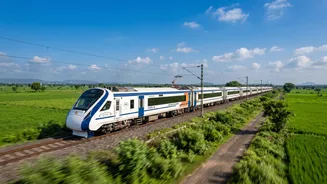
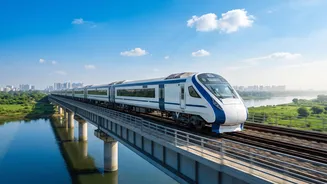
The Vande Bharat Express, also known as Train 18, represents a new era for Indian Railways. These indigenously manufactured, semi-high-speed trains are not just about reducing travel time; they signify a major leap in passenger comfort, safety, and onboard
experience. With features like airplane-style interiors, rotatable seats, large windows for panoramic views, onboard Wi-Fi, and advanced safety systems like KAVACH, they offer a world-class travel experience. The fully air-conditioned coaches with automatic doors and bio-vacuum toilets have set a new standard. More than just a mode of transport, Vande Bharat trains are a symbol of the 'Make in India' initiative, connecting the country's cultural, spiritual, and economic centres with unprecedented efficiency and style.
The Spiritual Expressway: Delhi to Varanasi
The New Delhi-Varanasi route holds a special place in the Vande Bharat story as it was the very first service to be launched. It connects the political capital with one of India's oldest and most sacred cities. The train covers the approximately 770-kilometre distance in just eight hours, a significant reduction compared to other rail options. Running six days a week (excluding Tuesdays on one service and Thursdays on another), it offers morning departures from both cities, making it convenient for business travellers and pilgrims alike. With key stops at major hubs like Kanpur and Prayagraj, the train has become immensely popular, bridging the gap between modern infrastructure and ancient faith. The introduction of a second, saffron-coloured Vande Bharat on this route underscores its high demand and strategic importance.
Gateway to Vaishno Devi: Delhi to Katra
For millions of devotees, the journey to the Shri Mata Vaishno Devi shrine is a sacred pilgrimage. The New Delhi to Shri Mata Vaishno Devi Katra Vande Bharat Express has transformed this journey, making it faster and more comfortable. This service covers the 655-kilometre distance in around eight hours, a significant improvement over the 12-plus hours it often took previously. Operating six days a week (excluding Wednesdays), the train provides a direct, high-speed link to Katra, the base camp for the trek to the shrine. By offering a reliable and comfortable day-time travel option, the train has been a game-changer for pilgrims, especially families and the elderly, boosting religious tourism in the region.
Expanding the Northern Network
Beyond the two anchor routes, the Vande Bharat network in Northern India has grown impressively, with Delhi as its central hub. The Delhi-Amritsar service, for example, connects the capital to the spiritual heart of Sikhism in just over five and a half hours. Another key route is the Anand Vihar (Delhi) to Dehradun train, which has become a boon for tourists heading to Uttarakhand's hill stations like Mussoorie and Rishikesh, covering the distance in under five hours. Other significant services link Delhi to cities like Ajmer, a major pilgrimage site, and Chandigarh, enhancing connectivity across Rajasthan, Haryana, and Punjab. These routes collectively form a web of modern connectivity, making weekend trips and business travel more feasible than ever.
Connecting Culture and Commerce
The impact of the Vande Bharat network extends far beyond just passenger convenience. These trains are proving to be powerful engines for economic growth and cultural exchange. By connecting major pilgrimage sites like Varanasi, Katra, Haridwar, and Amritsar, the network has created a robust spiritual tourism circuit. This enhanced connectivity directly benefits local economies by boosting hospitality, trade, and employment opportunities. For tourists and business people, the reduced travel time and reliable service mean more time spent at the destination rather than in transit. As the network continues to expand with more routes and the planned introduction of sleeper versions for overnight journeys, it is set to further integrate India's northern heartland, proving that modern infrastructure is a key bridge to both faith and development.