







A New Constellation of Players
Recent statements from ISRO's leadership have sought to reassure the nation and its own workforce that the organisation is not being privatised but is instead at the centre of a major expansion of India's space capabilities. The conversation was sparked
by the government's ambitious Indian Space Policy 2023, a framework designed to open the final frontier to non-governmental entities (NGEs). This has led to a boom in private space-tech startups, growing from a single company in 2014 to over 400 today, all aiming to build everything from satellites to rockets. This influx of new players has naturally led to questions about the role of the legacy institution that started it all. ISRO officials have clarified that the goal is to grow the entire space ecosystem to meet soaring domestic and global demand.
A Clear Division of Labour
The new policy creates a clear structure, assigning distinct roles to different organisations to prevent overlap and maximise efficiency. Think of it as a strategic restructuring. ISRO's new mandate is to focus primarily on the 'what next'—pioneering research, developing new technologies, and undertaking complex missions that are beyond the scope of private firms. To manage the private sector's entry, a new body called the Indian National Space Promotion and Authorisation Centre (IN-SPACe) has been created. It will act as a single-window agency to authorise, promote, and supervise the activities of private space companies. Meanwhile, NewSpace India Limited (NSIL), ISRO's commercial arm established in 2019, will handle the business end. Its job is to commercialise ISRO’s mature technologies, like the workhorse Polar Satellite Launch Vehicle (PSLV), and procure launch services from and for the private sector.
ISRO's Next Frontier: Research and Exploration
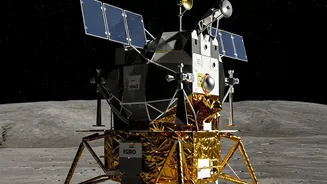
By handing over routine manufacturing and operational launches to industry, ISRO is freeing up its top scientific talent for more ambitious, cutting-edge projects. Its focus is shifting towards frontier science and exploration. This includes flagship programmes like the Gaganyaan human spaceflight mission, which aims to send Indian astronauts into orbit, and the development of the Bharatiya Antariksh Station, India's own space station. Furthermore, ISRO will lead deep-space exploration, including follow-ups to the successful Chandrayaan missions with projects like a lunar sample return mission (Chandrayaan-4) and joint exploration with international partners. The agency will also spearhead the development of next-generation launch systems, such as reusable rockets, ensuring India remains at the forefront of space technology.
Why Change a Winning Formula?
The strategic shift is driven by a simple reality: India's space needs have outgrown what a single agency can deliver. ISRO Chairman V. Narayanan noted that while India currently has about 56 operational satellites, the country's demand requires around 50 launches annually—a frequency that necessitates a much larger industrial base. Economically, the move is designed to significantly increase India's share of the global space economy. Currently valued at around $8-9 billion, the Indian space sector is projected to reach $40-45 billion by 2030. By allowing private players to handle serial production, India can build launch vehicles and satellites at scale, competing more effectively in the lucrative international market. This allows ISRO to do what it does best: innovate, explore, and push the boundaries of science for national progress and strategic capabilities.